The post Nasca, Huacachina and Paracas appeared first on Never. Not. Eating..
]]>A CLOSER LOOK AT NASCA, HUACACHINA AND PARACAS
NASCA
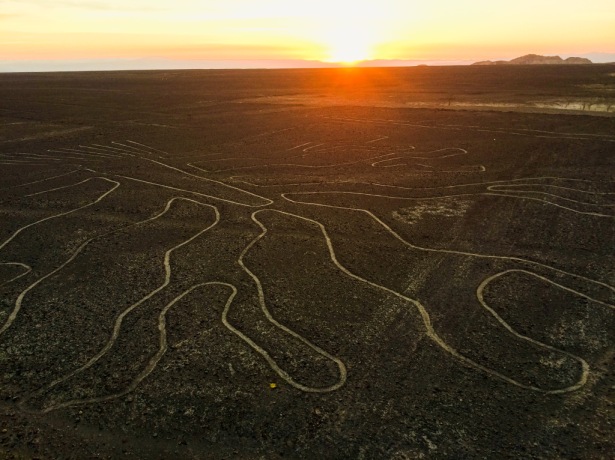
I made a quick stop in Nasca on my way to Huacachina, and I’d say that’s all you need. The major pull to this town are the Nasca Lines – Etched designs, carved into the dry desert ground, dating back a few millennia. To see the lines, you can book a flight tour to get the full experience, or you can climb one of the lookout towers to observe a select few designs (this is what I did).
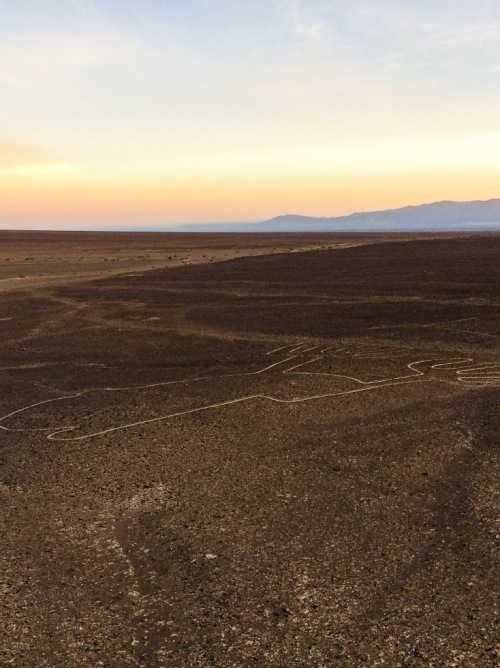
The area has been coined a UNESCO World Heritage Site, and for good reason, as these designs have stood the test of time. The reviews for the flyover tour are amazing, so if you have the time and the money, check them out. If not, I’d scrap it from the list of places to see. Out of all three – Nasca, Huacachina and Paracas – Nasca had the least to see.
HUACACHINA
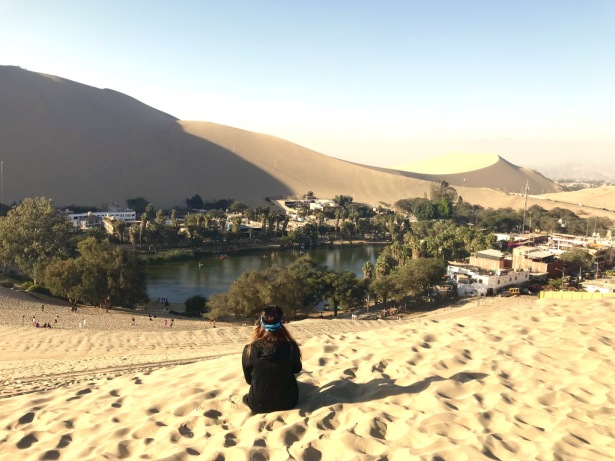
Further north up the coast is probably the cutest little town I ever did see – Huacachina. Not only does it have a name that is the most fun to say, it’s also the coolest oasis town. Never have I seen a community developed in such a neat place! The accommodations, shops and restaurants that make up this tiny town are nestled around a small body of water – an oasis – surrounded by picturesque sandscapes (a.k.a. sand landscapes). Huacachina is definitely worth hitting up!
ACCOMODATION
I only stayed in Huacachina for a few days, but I wish I stayed longer. There isn’t too much to do there, but I could have taken in those views unlimitedly. I stayed at Banana’s Adventure Hostel, which I highly recommend. A night’s stay is pricier than your average hostel, but it includes an activity for each night of your stay! It also includes breakfast, so…winning!
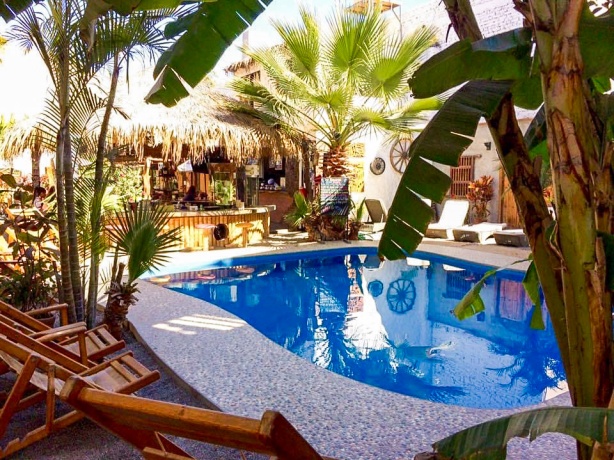
Banana’s has a pool to relax around and the cutest outdoor set up, with comfy lounge chairs, a tiki bar and a tropical menu. The food is really good, too!
THINGS TO DO
Dune Buggy & Sandboarding
This was one of the coolest experiences I had while in Peru. The brightly coloured dune buggies whip you around the desert and bring you to the top of some pretty gnarly hills to board down.
Board rentals are included in the price of the tour and are just a basic vessel to ride down on. The guides recommend you only go down the dunes on your stomach, and I would listen to their wisdom. From personal experience, sandboarding is NOT the same as snowboarding. It is much more challenging, and I may have walked away with a slight back injury from trying to be a hero and standing up on the board. Don’t be like me.
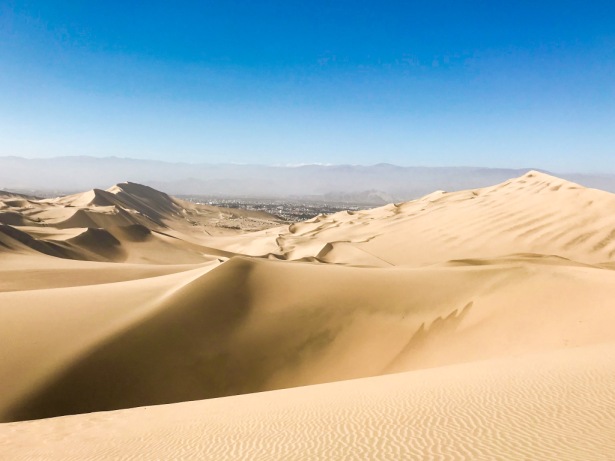
I do have to say that sandboarding was one of the most exhilarating yet terrifying things I have ever done. It’s one of those things that I only want to do once. Some of the smaller hills were fun, but when we got to the top of the larger hills, looking down was terrifying.
Going down was a whole other form of terrifying. It’s unbelievable how fast you are going. I stayed perfectly still on the descent. I felt like any false move would flip me over, and at that speed, end my life (dramatic, but true). By the time you get to the bottom, your shoes are completely filled with sand as well as your pants, shirt, hair, etc. Trust me when I tell you to wear long sleeves, socks and proper footwear – you don’t want to leave with sand burns.
Overall, sandboarding is something that you need to try once, and Huacachina is the place to do it!
Pisco Tour
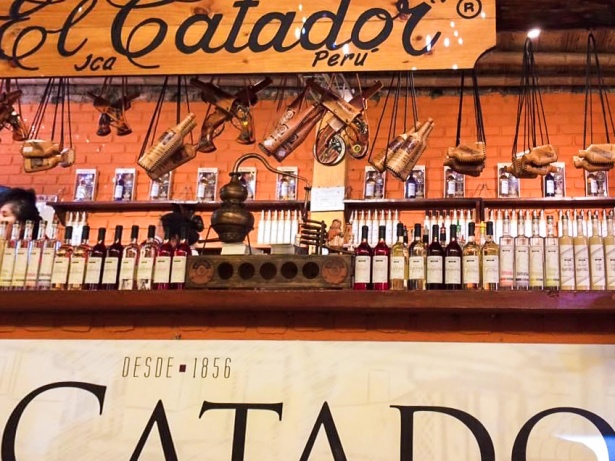
When in Huacachina, you have the option to visit the neighbouring city of Ica to experience a vineyard tour. This is a fun and relaxing day that I would recommend to travellers.
You are brought to a vineyard and taught the methods they use to make pisco (brandy) and wine. At the end of the tour, there is a (healthy) tasting and you can browse their shop to purchase your own spirits. It was interesting to learn the process locals go through to produce Peru’s most popular drink – the Pisco Sour!
FOOD
The food in Huacachina was surprisingly good. Two restaurants really stood out to me – Wild Olive Trattoria, and Banana’s hostel.
Wild Olive served the best pizza you could ask for after a day of sandboarding. The portions were big and the patio overlooked the water – what more could you even want? Highly recommend.
Banana’s, as stated above, had a great menu, especially for a hostel. They served up classics like hamburgers and fries, but also had vegan and vegetarian options.
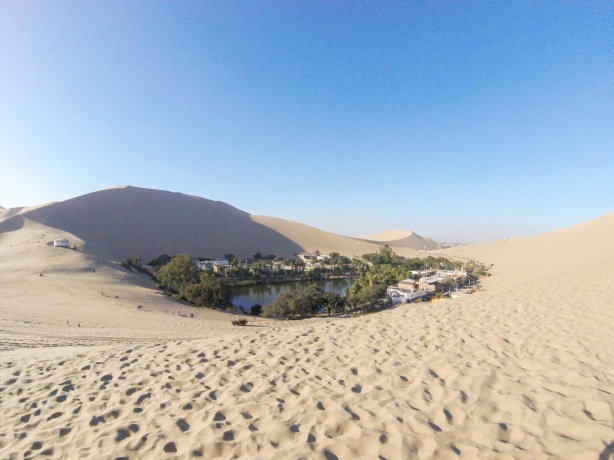
An amazing view, a fun adventure-packed experience, and great food…Check out Huacachina while in Peru!
PARACAS
Paracas is a cute little fishing town, just north of Huacachina, and right on the coast of the Pacific. It is mostly known for its “Poor Man’s Galapagos Islands,” or Islas Ballestas.
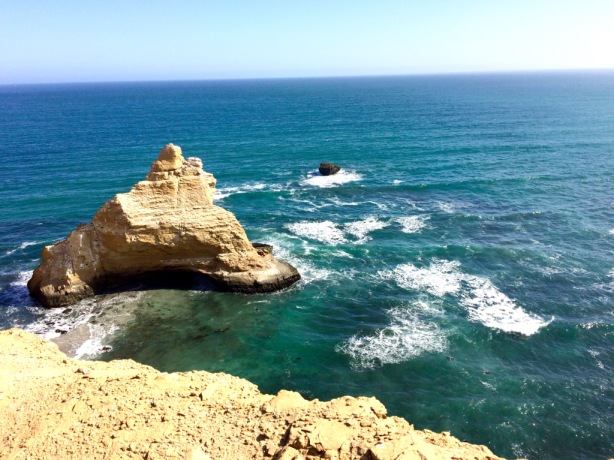
Although I enjoyed my stay in Paracas, I don’t think you should spend too much time there – one night is plenty! The town is small, and everything there is to do can be done in a day’s time.
ACCOMODATION
By far the best hostel in Paracas is Kokopelli. It is right on the beach, has a pool, a huge outdoor patio with tons of games, and it is just FUN. The dorms have their own little private pods with a curtain and there are lockers for your belongings. The outdoor patio has pool and foosball tables, an extra large bar, hammocks and the best sign that says “Wish you were beer.” I mean, how can you go wrong?
Oh, and they also provide kayaks and stand-up paddle boards!
THINGS TO DO
Islas Ballestas
I have mixed feelings about this trip. On the one hand, I feel like it was good to get out on the water (as this didn’t happen too much on my trip, despite Peru being a coastal country), and on the other, it just wasn’t what I expected.
Islas Ballestas was the VERY poor man’s Galapagos. I saw a shit-ton of birds and a few sea lions and that was it. It may have been the time that I was there (early August – Peru’s winter), or the day (very overcast and cold), or even my luck, but I just wasn’t too impressed.
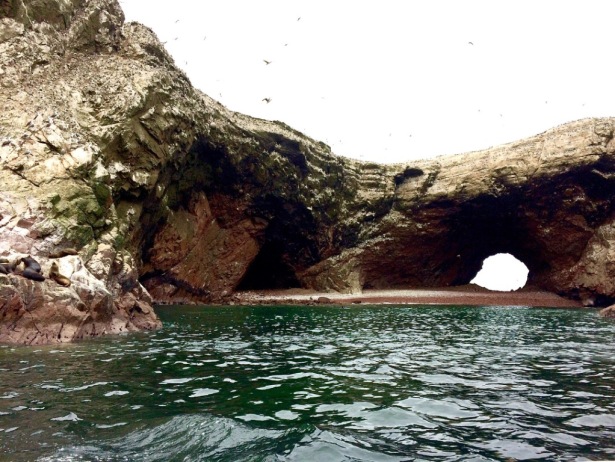
If the weather is nice when you are in Paracas and you enjoy being out on the water, I would say “Go for it!” You may get lucky and see some penguins or aquatic life, but know that you may also just be paying to be target practice for the hundreds of birds that inhabit in the area. Making memories either way!
Malecon El Chaco
This is a little pathway that runs parallel to the coastline. It hosts a number of restaurants and stores that overlook the water. It’s a cute little area to walk along, grab some grub, and watch the events happening on the water.
Other than that, there isn’t too much else to do in Paracas, but there are some neat day trips that you can take outside of the city! My top recommendation would be the Paracas National Reserve.
Paracas National Reserve
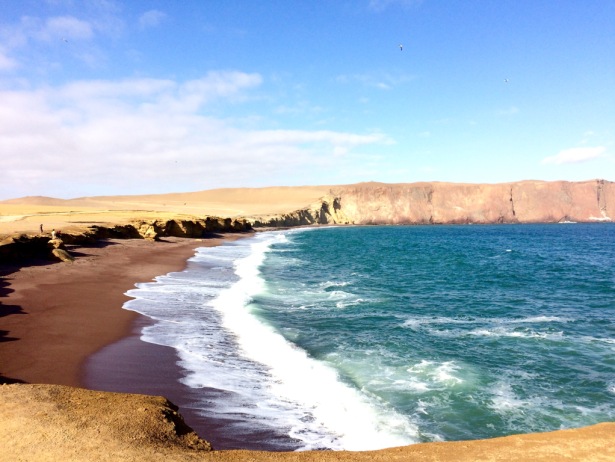
This is a protected, natural area just south of the town of Paracas. It is a gorgeous landscape where the desert meets the ocean. The waters are turquoise-blue and super picturesque. The reserve is also home to many different wildlife, as an extension of Ballestas, but I wasn’t lucky enough to see any while I was there.
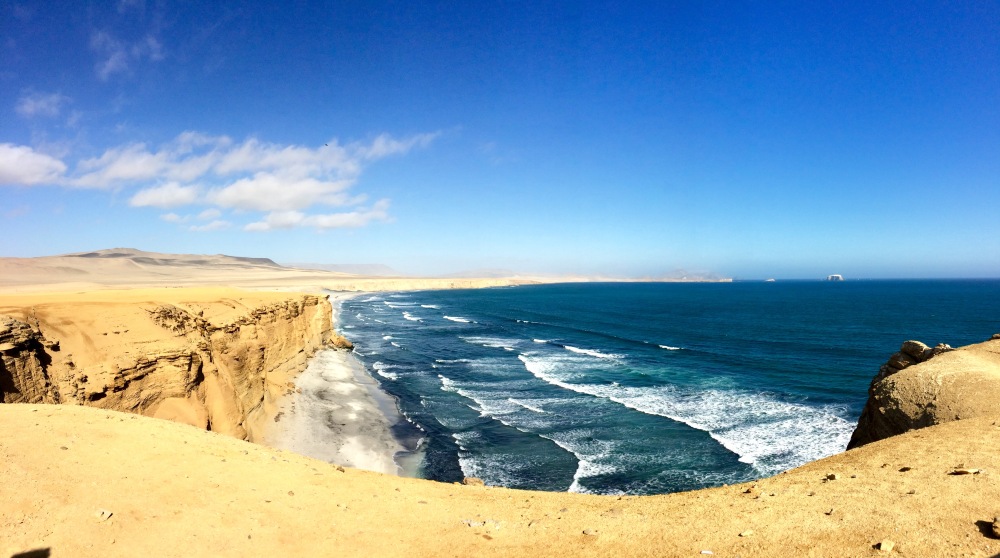
The Candelabra is another interesting spectacle located at the reserve. It is a candlestick-shaped geoglyph that has been etched into the side of one of the coastal ridges, dating back to 200 BCE.
Casa Hacienda San Jose
Another day trip includes this hotel, about an hour drive from the town of Paracas. The hotel, also known as the “slave tunnels” of Peru has a dark history, despite being a sight for sore eyes. It is currently opened to visitors to book rooms, but previously was a sugar and cotton plantation where slaves were smuggled in through the underground tunnels which connect all of the Haciendas in the area. Slavery was legal in Peru at the time, but the owners avoided paying taxes on the slaves by bringing them underground, immediately from the boats they arrived on.
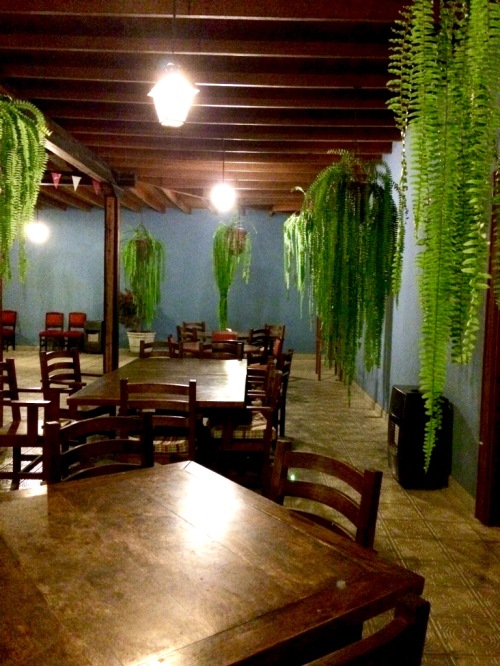
Through the Peru Hop tour I was on, we were able to enter the hotel without staying overnight. We went underground to check out the tunnels, many of which were a tight squeeze! It was creepy, to say the least, but fun at the same time. I recommend taking a quick stop on your way back to Lima to check it out!
Although it doesn’t take long to see it all, Paracas was a definite 10 on the cuteness scale and worth a quick stopover. Take a day to get a taste of life by the sea!
NASCA, HUACACHINA AND PARACAS – WORTH IT!
If you have time and enjoy a slower pace, check out Nasca, Huacachina and Paracas while you are in Peru! You only need a day or two for each place and the experiences offered at each are super unique and picturesque!
Go back to Southern Peru – A Backpacker’s Guide
The post Nasca, Huacachina and Paracas appeared first on Never. Not. Eating..
]]>The post Backpacking Arequipa and the Colca Canyon appeared first on Never. Not. Eating..
]]>Sitting at 2,335 metres above sea level, it’s the perfect place to take a (slight) break from the higher-altitude cities, like Cusco, Aguas Calientes and Puno.
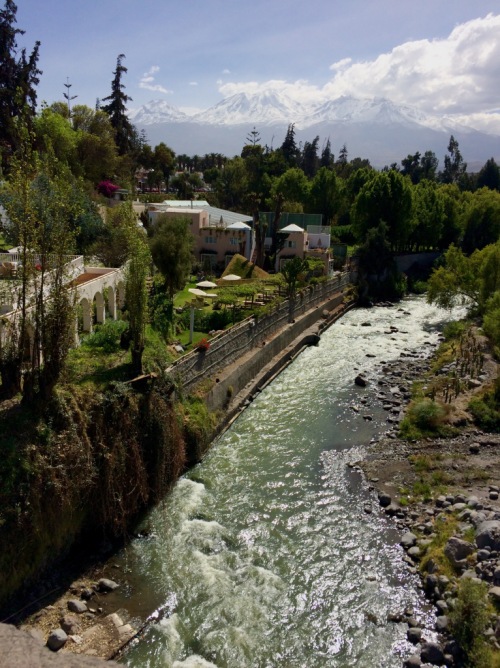
The backdrop of Arequipa
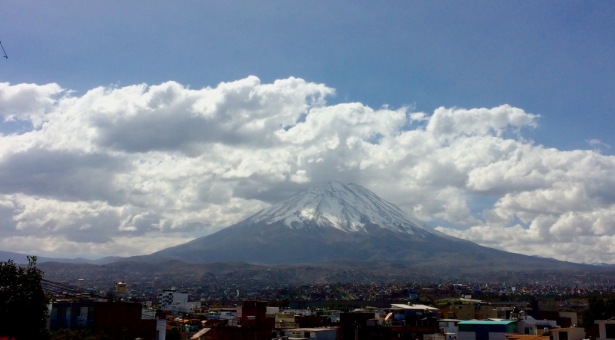
Arequipa is nestled amongst three towering volcanoes – El Misti, Mount Chachani and Pichu Pichu Peak. El Misti, meaning “The Gentleman” in Quechua, is by far the most well-known. You can hike Misti to acquire some breathtaking views at the summit, which takes two days and sits at 5, 825 metres above sea level.
WHERE TO STAY WHILE BACKPACKING AREQUIPA AND THE COLCA CANYON
As Arequipa is a fairly large city, there are a number of different places to stay while visiting. I stayed at Yes! Arequipa Hostel which has it’s pros and cons.
Pros
The hostel had a few different options for bedrooms. You could stay in dorms, or private rooms. I opted for a private room, which I don’t typically do, but sometimes you need to treat yo ‘self. The room was spacious and clean. There were a few large private bathrooms nearby which were nice to have.
The hostel also had a pretty good (free) breakfast available as well. The workers helped me book a tour to Canyon del Colca, and they stored my bags while I was on the tour.
Cons
It was about a 10 minute walk from the main square. I didn’t mind this so much, but if you want to be in the middle of the action, I would suggest a different accommodation. I found it difficult to socialize and meet people at this particular hostel.
HOSTELS IN AREQUIPA
If you are looking for a different experience, the following are a list of hostels to check out, depending on your preferences:
- Positive Hostel – A GORGEOUS colonial mansion with bright-coloured walls and dorm rooms. Three blocks from the main square with views of the mountains.
- Bothy Hostel – Three blocks from the main square, a chill hostel during the week and more partyish vibes on the weekend. It has a number of fun activities to take part in, such as ping pong and a pool table.
- Way Kap Hostel – A chill hostel with some great common space areas to hang out in and meet like-minded travellers. Located in the historic centre and close to the main square.
- Arequipay Backpackers Downtown – If you are an active yogi, check out this clean and friendly hostel. They offer a gym on-site, yoga classes, ping-pong, a pool table and many other services.
FOOD
Tradicion Arequipena – If you are looking for a traditional meal at a decent price, try Tradicion Arequipena. You can sit in the garden, eat with a view and listen to traditional Peruvian music.
Zingaro Restaurant – Another traditional Peruvian restaurant nestled inside a building with the cutest decor and rustic appeal. Enjoy common dishes, such as Rocoto Relleno (stuffed peppers), quinoa soups, cuy (guinea pig) and alpaca.
El Buda Profano – If you are looking for something different, try this Japanese joint that serves up vegan sushi. Fun, delicious and a change when needed!
Capriccio – In need of something sweet? Check out this pastry shop, cafeteria and ice cream parlor! They serve up cakes, alfajores, profiteroles, and more delicious treats. The perfect mid-day snack.
THINGS TO DO WHEN BACKPACKING AREQUIPA AND THE COLCA CANYON
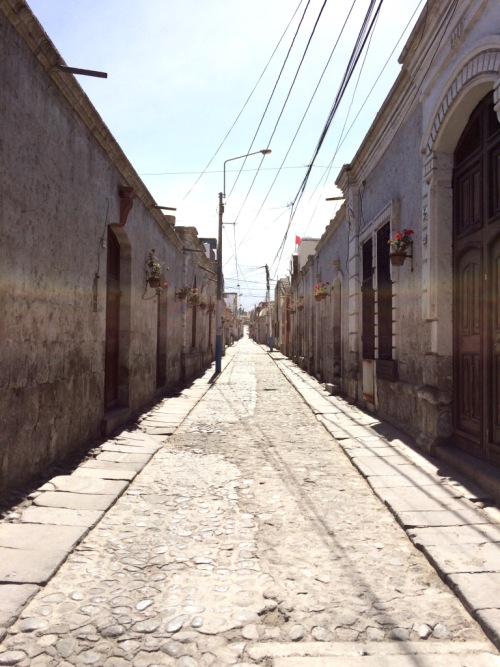
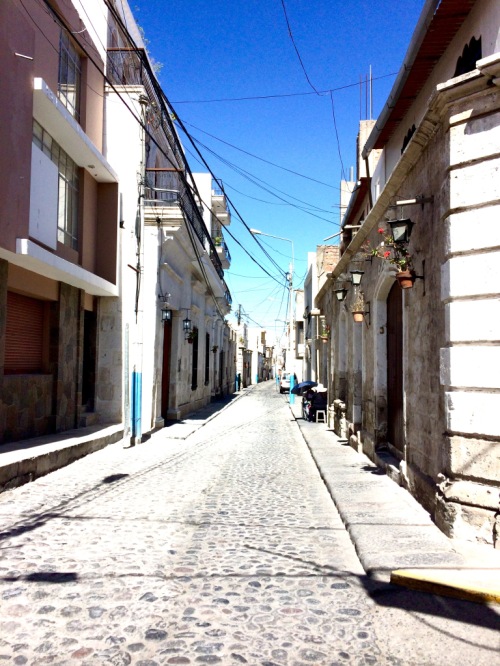
Walk around. Seriously, this city is so beautiful and sometimes the greatest adventures are getting lost in the streets of a city you don’t know. Similar to Cusco, the streets of Arequipa were breathtaking. Whether you are hanging out in the main square or crossing the river to the Yanahuara Viewpoint, you won’t be disappointed with the views.
Plaza de Armas, Arequipa
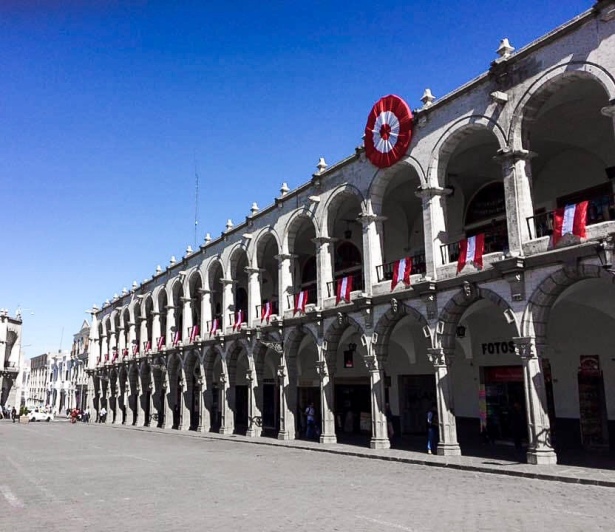
The Plaza de Armas (main square) in Arequipa is a stunning vision. Cathedrals, shops and balconies made from sillar (white volcanic rock), give this place it’s nickname, “The White City.” Visit the basilica cathedral while you are there – it is an impressive feat that spans the length of the plaza and is the subject of beautiful photos.
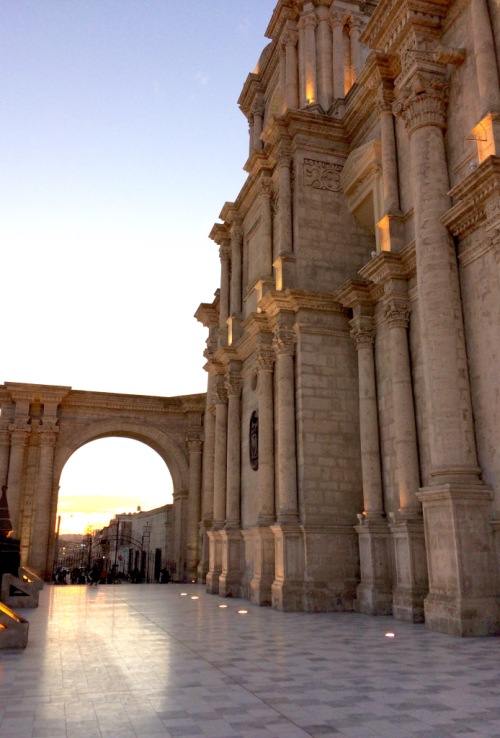
The historic centre of Arequipa has been named a UNESCO World Heritage Site, so naturally, there is a lot of eye-candy happening when you arrive. The main plaza is bustling with locals of all ages. Walk around, or find a spot on a bench to watch the exchanges and embrace the culture.
From the plaza, head north to see the Monasterio de Santa Catalina, a stunning convent that fuses both Spanish and Native architecture.
After checking out the monasterio, head northwest to the Yanahuara Viewpoint. Cross the Rio Chili to arrive at an arched platform that looks out onto the city below. Views of Mt. Misti are worth the 25-30 minute walk to get here.
THE COLCA CANYON
This is a MUST if you are staying in Arequipa. You will likely be able to book a tour to the canyon from your accommodation, and if not, hit up one of the tourist shops around the city to help you out. This was one of my favourite excursions in Peru. It is one of the deepest canyons in the world and is carved out by the Colca River.
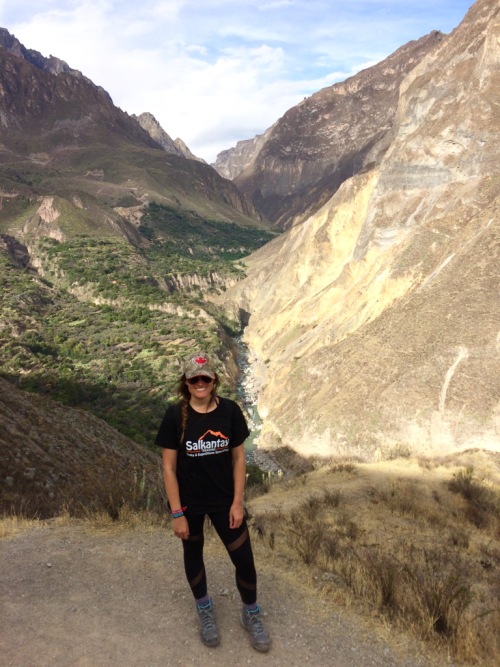
I decided to do the 2-day trek, which was both challenging and extremely rewarding. It was a reasonable price for what was included. Upon arrival (after a lengthy bus ride from my hostel in Arequipa), we spent the entire first day hiking down the canyon to the very bottom. The descent was long and after a while, it took a toll on your knees, but we survived!
THE OASIS IN COLCA CANYON
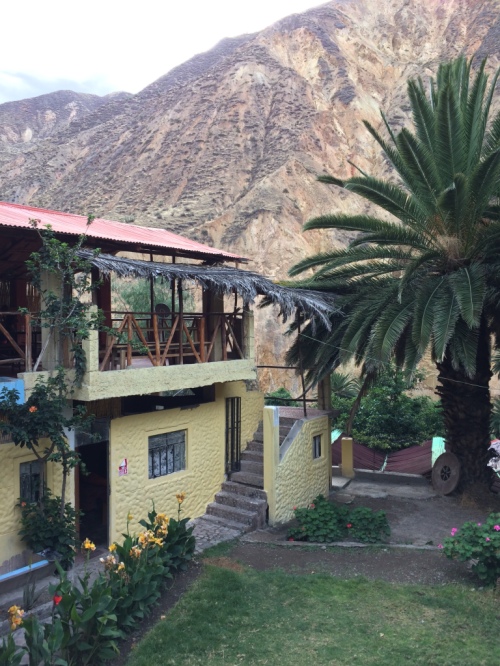
At the bottom of the canyon, we crossed the river and enjoyed a local lunch before climbing back up part of the other side to an oasis, where we stayed overnight. The oasis was a very basic accommodation with a pool and a small restaurant that served up some yummy (and well-earned) spaghetti for dinner.
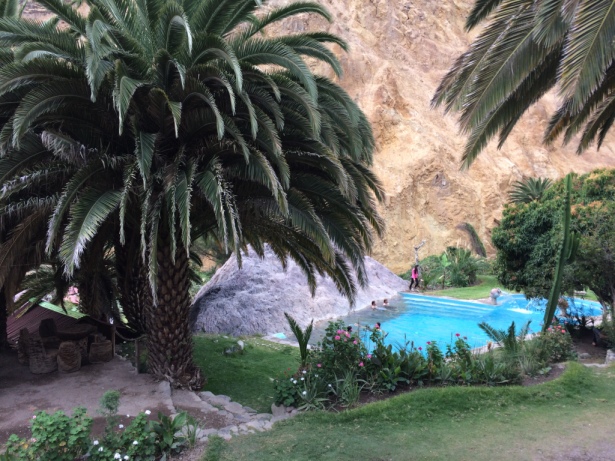
The rooms at the oasis were nothing special. There was no electricity and the toilets were outside and shared by all of the guests. Checking your bed for critters, including little scorpions, is a good idea. We only stayed here for one night, so the experience wasn’t too bad.
HIKING UP THE COLCA CANYON
The next day, we started hiking back up the canyon at 5:00 a.m. Headlamps are needed for this hike to see where you are going. I won’t lie – the uphill hike was extremely challenging. The winding path upwards was met by a number of large stones that required a lot of effort when nearing the top. My leg muscles were bangin’ after this hike.
The tour guides give you three hours to get up, and if you don’t think you will make it in that time, you can rent a horse/donkey to take you the rest of the way (or from the beginning). I climbed it in just under two hours, so it is completely doable if you are an active person who hits the gym every once in a while.
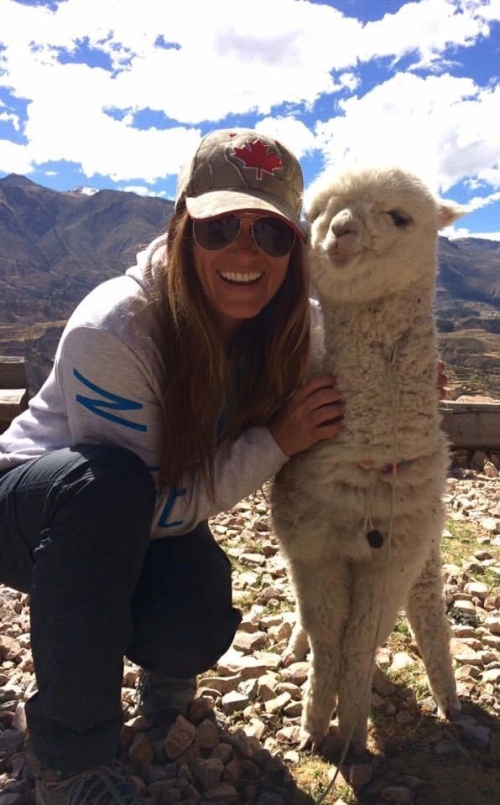
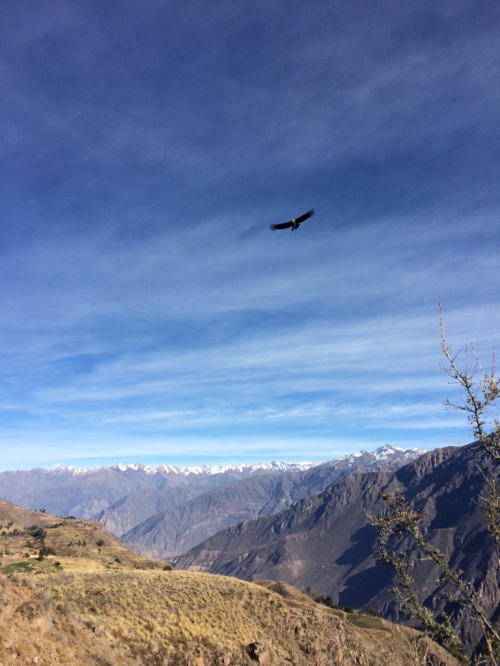
At the top of the canyon, there are a few lookout points where you will likely stop on your first day. The view is gorgeous. The canyon is home to the Andean Condor – which has an impressive 3-metre wingspan. They fly up from their nests every so often, so keep an eye out when you are at the top!
Like I stated earlier, this hike was well worth it. You will take in views you’ve never seen before and get in a respectable workout. Our crew went out on the night we finished the hike and all of us downed our own extra-large pizza with ease. We likely could have eaten two, with the calories burned over the last few days. Best. Hike. Ever.
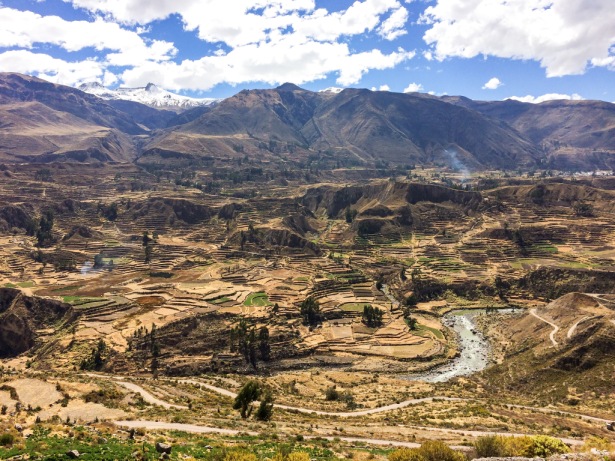
Different from any city I’ve ever been to, Arequipa is well worth the trip from Lima or Cusco. Set aside 5-7 days to experience backpacking Arequipa and the Colca Canyon. Roam, hike, eat and take in the views of this amazing “White City!”
Head back to Southern Peru – A Backpacker’s Guide
The post Backpacking Arequipa and the Colca Canyon appeared first on Never. Not. Eating..
]]>