The post Lima – The Capital of Peru appeared first on Never. Not. Eating..
]]>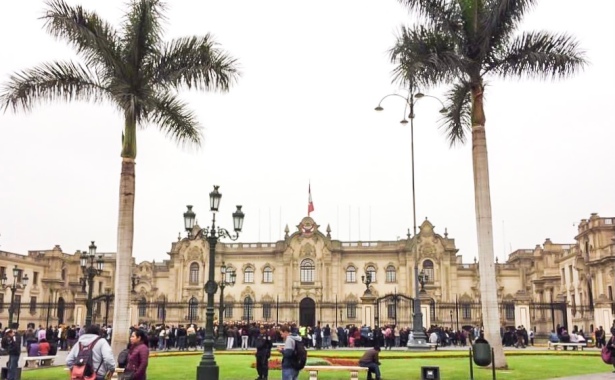
ARRIVING IN LIMA – THE CAPITAL
It is very likely that you will fly into Jorge Chávez International Airport upon arrival in Peru. If you are staying in a hostel, you can ask them to arrange a cab for you, which is what I did.
As a solo female traveler, this is always the scariest part…navigating your way from the airport to your first accommodation without knowing which way was up…or much of the language for that matter. I found that having someone waiting for me with my name on a little piece of paper took away a lot of the nerves. If you grab your own cab, just be sure to always settle on a price beforehand or ask for the meter.
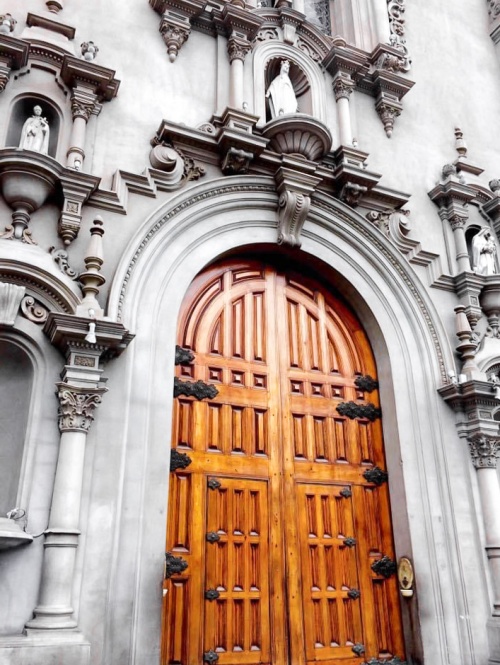
WHERE TO STAY IN LIMA
I did a lot of research on the different neighbourhoods and areas of Lima before my trip. The more popular tourist areas include Central Lima, San Isidro, Miraflores and Barranco. As a backpacker, I would recommend staying in Miraflores or Barranco. Central Lima is known to be a little more sketchy at night and San Isidro is too pricey for the typical backpacker. Dorm beds in Miraflores and Barranco average between 15-20 CAD per night (11-15 USD).
Miraflores
ACCOMMODATIONS
I stayed at a hostel called Pariwana when I was in Miraflores, Lima. It was in an excellent location – walking distance to the cliffside and surrounded by cute restaurants, cafes, bars and malls. I chose Pariwana because it not only had great reviews, but it looked like somewhere that had a mix of both chill vibes and a good opportunity to socialize and meet people. It also had breakfast and unlimited tea included and the barkeeps make up some tasty (but dangerous) Pisco Sours. It was clean, the beds were comfortable and the employees were super nice and helpful.

If you stay in Miraflores, I would recommend staying in one of the hostels that surround Parque Kennedy and Parque Central de Miraflores. The park is in the shape of a triangle with the tip surrounded by malls, restaurants and your everyday McDonald’s.
Pariwana is directly across from the McDonald’s. I spent many nights walking the perimeter of the park as this is where you will find many eateries, cafes, cultural events, museums (many of which are free) and food vendors. The coast is a straight, 10-minute stroll down Av. Jose Larco and you should walk it many times, because a view like that never gets old.
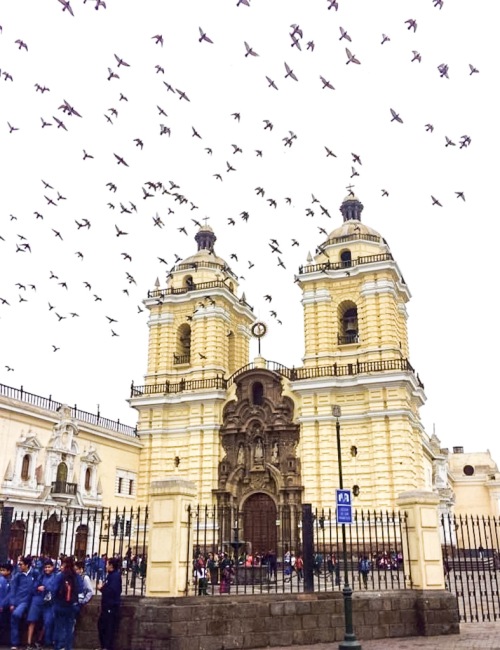
Pariwana offered a few FREE tours that you could go on throughout the week. I took advantage of these tours and visited the downtown historic centre (Old Lima) as well as the closeby artsy Barranco neighbourhood. The tour guides worked solely on tips and the tours were educational, fun and a great way to meet people. The downtown tour even included pisco tastings…worth it!
Other hostels near Kennedy Park that have received great reviews are:
FOOD
If you are looking for an authentic experience, try Punto Azul on Calle San Martin. It was by far the best ceviche I had while in Lima. They also serve other popular Peruvian dishes, like tacu tacu (rice and beans) and causa (a potato dish). Everything was delicious and priced for a backpacker! Just make sure you go earlier in the day as it becomes busy and the best ceviche is served at lunch, when the catch is still fresh!
Another delicious, yet economical eatery that I tried was La Lucha Sangucheria. They serve a variety of yummy sandwiches and juices. As it is a chain, you will find a few of them around Lima. There is one located at Parque Kennedy, diagonal from Pariwana. Their sandwiches are loaded with meats of all kinds, from chicken to turkey to ham to the classic chicharron. They serve beverages such as fresh juices, frozen juices, shakes, coffee and pisco sours. Yum!
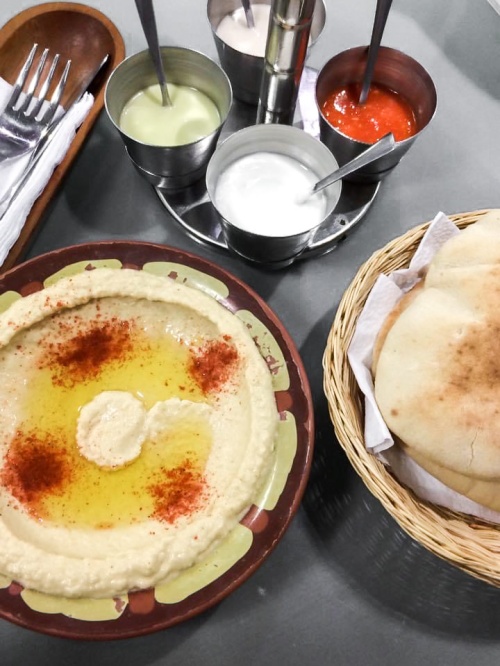
If you’ve been in Peru for a while and are looking for a change from the local food, you have to try Tierra Santa. It serves shawarma, hummus, pita and all things Middle Eastern. It is DELICIOUS. Some of the best hummus I have ever had. It is decently priced and a short walk from the hostels around the Parque.
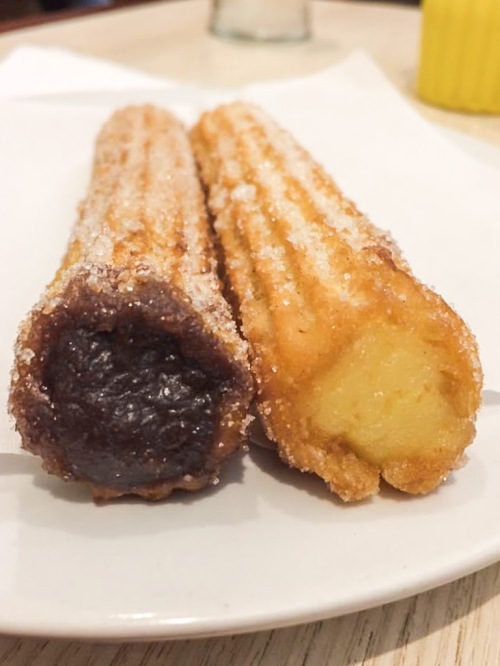
Finally, you can’t be in Peru and not have churros. There are so many places to buy them in Miraflores, and all over Peru for that matter. You can purchase them off of vendors on the street or hit up a local cafe to enjoy. I tried the ones at Manolo. It’s a busy place, but the churros here are delicious. Try the filled ones!
THINGS TO DO
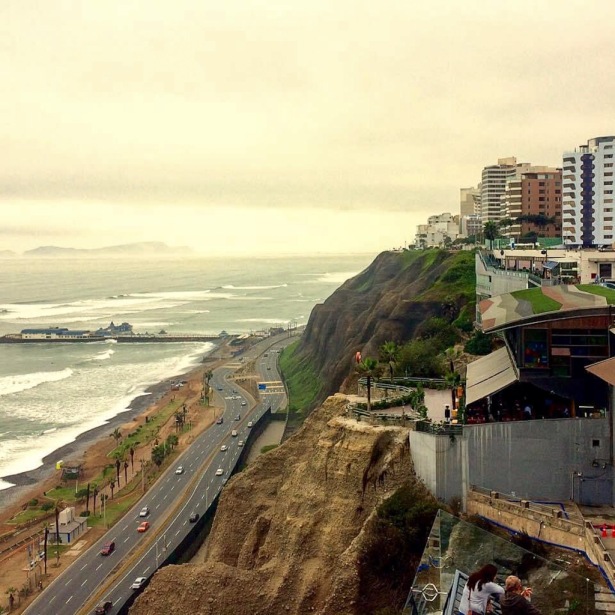
Firstly, LARCOMAR. If you like to shop, and LOVE a good view – Go. To. Larcomar. Right on the coastline, this is a pricier, open-concept mall with some more expensive-brand stores, but even if you aren’t making any purchases, it’s something to see. It was worth going solely for the view of the steep cliffside, Pacific waters and the food court palettas. You can also gain free access to the SAM Salla De Arte Moderno Museum right inside of the shopping area. Winning.
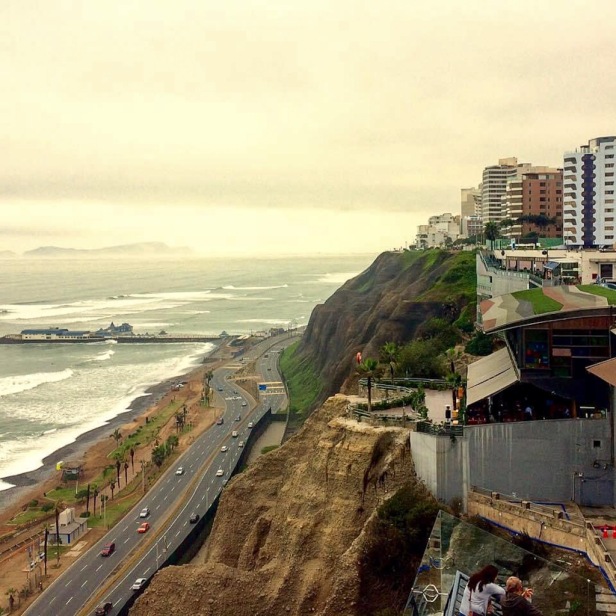
Around Larcomar, you can also watch or participate in many fun activities. Sit at one of the viewpoints and watch the paragliders, enjoy a walk down the pier or rent a bike and scoot around Miraflores. You can also take surfing lessons on the beach!
RUINS
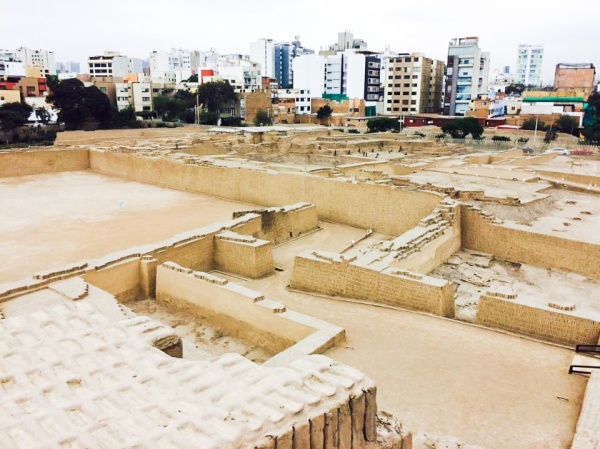
I walked to a site called Huaca Pucllana, which only took about 20 minutes from Parque Kennedy. Entrance cost 15 sol (about $6 CAD or $4.50 USD) and included a guided tour which lasted for about an hour. I found the ruins to be fascinating as the city was built up around them so it was like you were standing amongst two worlds – that which was built several thousands of years ago and the modern urban sprawl. It also housed some cute local animals (alpacas and guinea pigs).
Miraflores was my favourite part of Lima. If you are flying into the capital, you need to make a stop in this beautiful and vibrant city!
Barranco
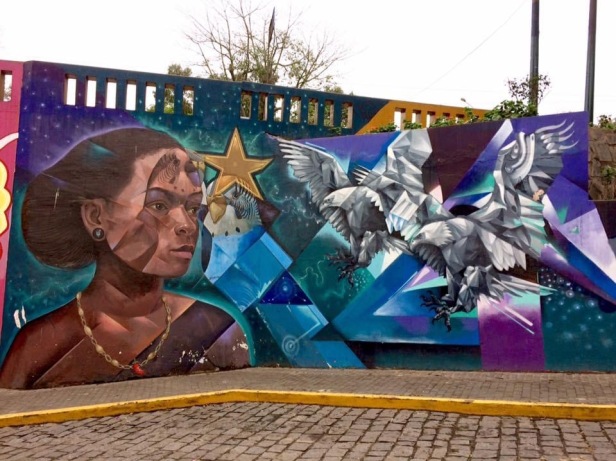
Known as the more eclectic, artsy district, Barranco is another good option for backpackers. It is a bit further down the coast from the airport, but it’s a funky little place where the streets are lined with artwork and culture. It is a popular area for nightlife and food as well.
ACCOMMODATIONS
Although I didn’t stay in Barranco, I have compiled the names of a few hostels that have received great reviews that you could look at if you choose to stay in this neighbourhood:
The Point – A party hostel that is clean, close to the beach and has friendly staff.
Barranco’s Backpacker’s Inn – A quiet hostel, close to the beach and the main square.
Casa Eguren Art Hostel – A highly “Instagrammable” space. This accommodation is a gorgeous 19th century poet’s home that’s been turned into a hostel. The building is surrounded by the city’s art and is a few blocks from the coast.
FOOD
Inspired by fresh markets and seasonal foods, LA 73 is one of Barranco’s hippest bistros. The menu has a good variety and is decently priced if you are travelling on a budget.
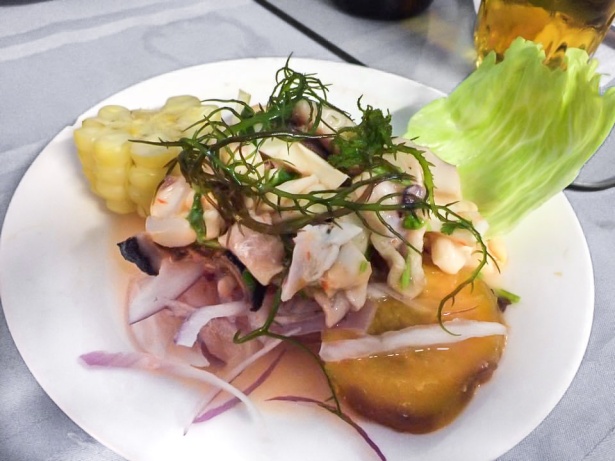
Secondly, El Muelle de Barranco is a great seafood and cevicheria option. Their portions are large and prices are low. They have an English menu, despite being full of locals. This hot spot generates a lot of traffic, so it’s best to go for an earlier lunch.
If you are looking for something different, check out Burrito Bar. Everything on the menu is made inhouse and is a delicious representation of Mexican cuisine. They serve burritos, tacos, quesadillas and chips with salsa. They also have a variety of refreshing drinks, including a few craft beers!
THINGS TO DO
Firstly, just walking the streets is exciting when you are in Barranco. It is so “hip” and eclectic and there is art everywhere. Take in the sights and enjoy the coastal views with a stroll through the neighbourhood! You will likely stumble upon the “Bridge of Sighs,” or La Puente de Los Suspiros, in Spanish.
The Bridge of Sighs
This bridge is one of the most popular symbols of art and love in Barranco. History says that it was a meeting place for men and women looking to find love and “woo” one another. The sounds of romantic “sighs” were what gave this bridge it’s name. It is also said that if you can hold your breath as you walk it’s entire length, one of your wishes will come true. I tried, and might I just say, I was successful. I can’t remember what I wished for though.
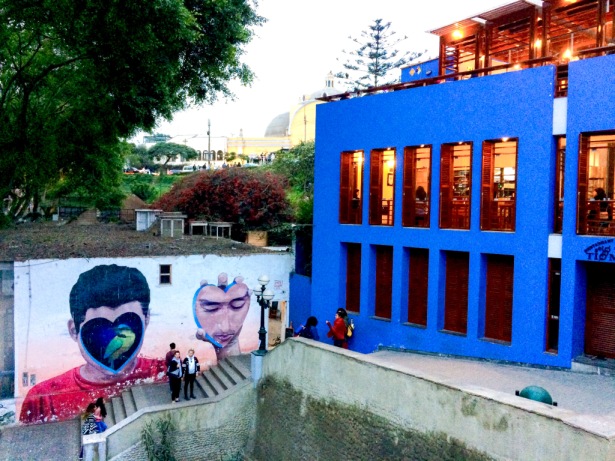
You will also likely come across Barranco’s Main Square. An exciting place to be, as it is constantly booming with local artists and performances. Standing in the square, you will have a 360 view of some of Barranco’s beautiful architecture and colourful buildings. It is worth a visit to just hang out and be amongst all of the daily happenings.
As Barranco is an art-forward town, you can’t skip out on it’s contemporary museums, especially MATE. This museum was founded by Mario Testino and shows an impressively modern display of artworks which focus on culture and heritage.
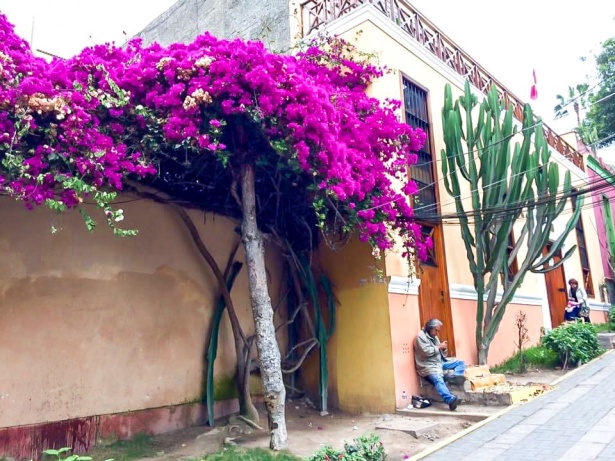
Finally, on your walk around town, you will come across the Bajada de los Baños, a long walkway leading down to the coast. As an old fishing village, fishermen used to walk the path to the Pacific. Now, it is lined with a number of restaurants and watering holes to stop in at.
Barranco is just a 30-minute walk from Miraflores. You can’t get lost as you just need to follow the coastline until you hit Larcomar. Both districts are well worth a visit!
YOU NEED TO VISIT LIMA – THE CAPITAL CITY
Lima – the capital, is an exciting city regardless of where you choose to stay. Enjoy the food, walk the cliffside, drink a pisco, and try surfing in the Pacific. It’s well worth a visit!
Go back to Southern Peru – A Backpacker’s Guide
The post Lima – The Capital of Peru appeared first on Never. Not. Eating..
]]>The post Southern Peru – A Backpacker’s Guide appeared first on Never. Not. Eating..
]]>
WHO IS THIS GUIDE FOR?
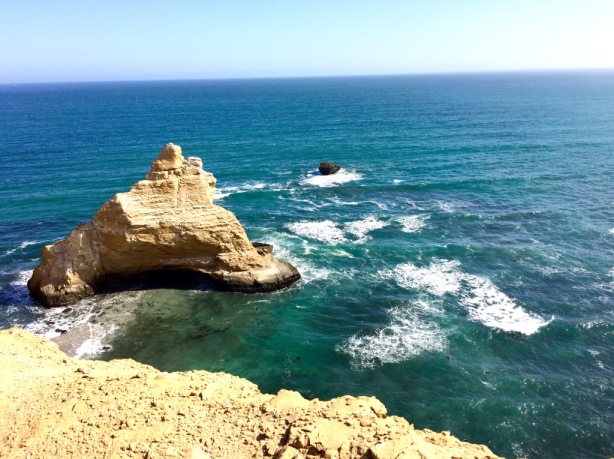
This guide will be helpful for those who are thinking about visiting Southern Peru, or have already booked and are looking for things to do, places to stay and important information that you may not find anywhere else. It is solely based on my experience there and what I took away from each place.
TRAVELING SOUTHERN PERU
Currency – In Peru, they use the Sol. One Sol is about $0.40 Canadian or $0.30 USD. I found most parts of the country to be reasonably priced. Food and other purchases were overall less expensive than home.
Safety – As a solo female traveler, I felt extremely safe in all of the regions that I visited. There are tourists everywhere and I found the Peruvians to be very friendly. As with anywhere that you travel, you still need to be cautious at night when you are alone, but I never had a problem.
BEST TIMES TO TRAVEL TO SOUTHERN PERU
Since Peru is in the Southern hemisphere, it’s summer and winter months are opposite that of Canada and the USA. I went in July, and would definitely recommend going during their winter (May – September), especially if you are hiking.
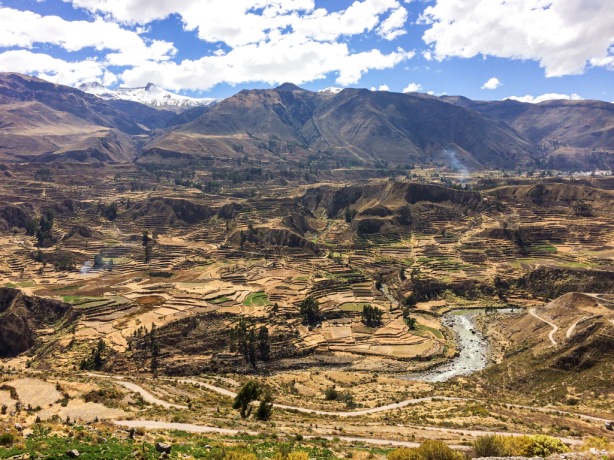
Peruvian winters are fairly mild, and I found the temperature hovered between 18-22 degrees Celsius during the day. The capital (Lima) had the most consistent weather of any city I had ever been to…18 degrees and overcast, every day. Despite being higher in elevation, Cusco is warmer, sitting at around 20-22 degrees each day, but significantly dropping overnight. It is not uncommon to experience weather from all four seasons within one day’s time in Peru’s higher altitude regions.
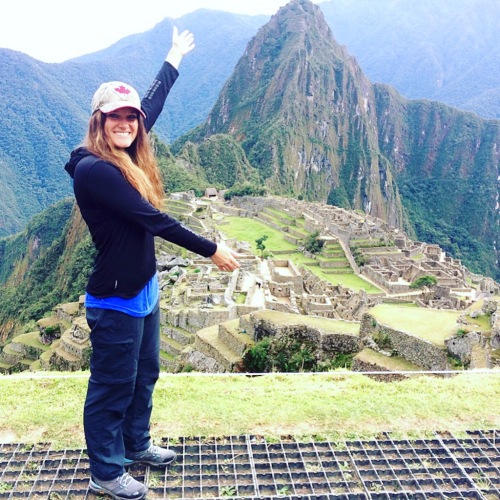
Summer in Peru (December – March) is warmer, but also subject to rain. If you are planning to visit Machu Picchu during Peru’s summer months, beware that they close the Inca trails each February due to heavier rainfall.
WHAT TO BRING
This depends on the type of trip you are taking. Below are some ideas that I found to be super helpful while there:
Backpacks: You need a few good backpacks, especially if you are going to be doing a lot of trekking.
Your main backpack needs to be a good size because you will likely need more space for heavier clothing options in order to battle the mountain climates. Click here for a great option that also includes a day pack. I also brought the Sirrus 24 Hiking Backpack with me on longer treks. It doubled as a carry-on for flights.
Also, instead of bringing a purse with me, I like to tour around cities by foot with a mini backpack, like the one found here. I find it to be way more comfortable to carry this than an over-the-shoulder bag. They are light, small and allow you to be hands-free for picture-taking! I also find mini backpacks to be my go-to when I’m out exploring all day long and need to pack a few extra snacks along with my wallet and camera. They are perfectly-sized and so comfortable!
Another one of my greatest discoveries as a traveler were these packing cubes. They have helped me stay sane when trying to locate something in my main backpack. I highly recommend purchasing them. I roll up my clothing and put all of my tops in one, bottoms in another, toiletries in a separate one, etc. They are lifesavers and so cheap.
Clothing
It is all about layering. The weather in Peru depends on the region you are traveling to and the time of year that you visit. Other than the coastline, a lot of the south is at a higher altitude and therefore it is much cooler at night. I would recommend packing everything from light tank tops to long sleeve shirts to cozy sweatshirts to a warm down jacket. This way, you can peel off during the day and add on at night when temperatures drop significantly. There were some nights I had to sleep in a hat (or, a toque as we call it in Canada) and mittens because the hostels don’t have heat, and the temperature dropped close to zero.
TRANSPORTATION
Getting around is pretty easy. When travelling city-to-city, I used Peru Hop, with the exception of going from Lima to Cusco, in which I flew. Peru Hop is one of the more pricey bus companies, but I think it is completely worth the safety, comfort and overall experience.
I did the “Full South to Lima” tour, which I loved because it hit up all of the main spots in the south of the country. The bus tour was pretty much seamless, with a few exceptions. Because I was in Peru during their winter months (July/August), we hit snow on the way down from Cusco to Puno and were stuck on the road for a few hours. Luckily it was an overnight bus and we could just extend our chairs and go to sleep.
The bus schedule was efficient and easy-to-use. The flexible, hop-on, hop-off style allowed you to stay at each location for as many days as you would like. The guides were good sources of information and always cheerful and upbeat. The majority of my buses were on time and usually had a variety of open seats throughout the entire tour. They provided blankets and had USB charging ports on every seat. And, if all that isn’t enough, they also provided a number of free tours at many of the stops, which I took full advantage of. The Pisco Vineyard tour was my favourite.
FOOD
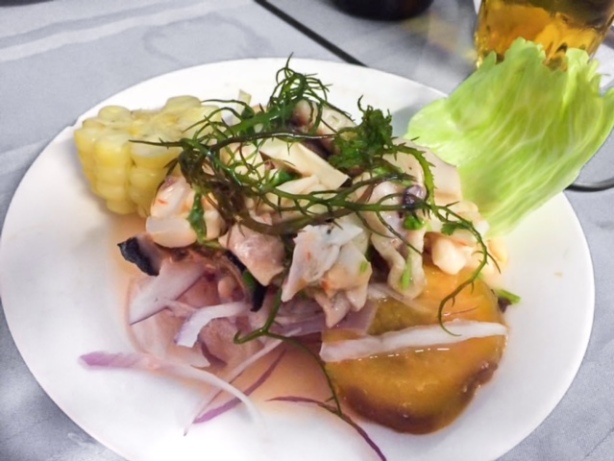
The food in Peru is unlike anywhere else I’ve been. It is heavily influenced by the ancient Incas and other indigenous populations, but has also been shaped by Chinese (Chifa) and European immigration to the country, featuring a wide variety of dishes.
Peruvian staples, found in a good majority of dishes include: potatoes, fish, corn, quinoa and beans. Guinea Pig is another popular dish that they serve (cuy), which I can’t say I tried…you will discover why if you keep reading. Lima is a growing culinary city, with restaurants run by highly-ranked, world-class chefs. However, I would really recommend being cautious when eating outside of Lima, in some of Peru’s other popular tourist destinations. I, myself, picked up a stomach bug and was down-for-the-count for a few days, on antibiotics, alike many other travellers I ran into.
Afterwards, I found it difficult to want to experience the cultural cuisine in fear of getting sick again, so if I can pass on any of my learnings to you, it would be best to avoid anything you are unsure about. Just be cautious and stick to cooked foods, especially in Cusco.
With all of that said, I would like to dive in for a deeper, more detailed look at each of the cities that I stayed in. I speak from my experiences and hope these posts provide useful information to backpackers in regards to where to stay, what to see, how to get around and anything else that I found to be helpful while touring the south of Peru.
THE BEST CITIES IN SOUTHERN PERU
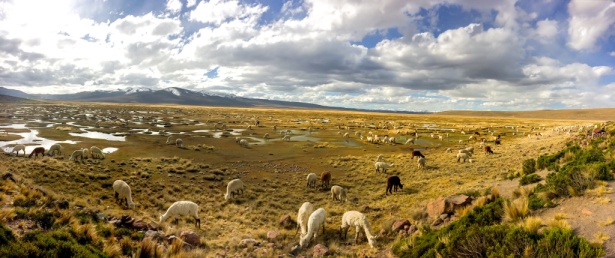
Click on the links below for more in depth information on each of the cities that I visited.
The post Southern Peru – A Backpacker’s Guide appeared first on Never. Not. Eating..
]]>