The post The 8 Best Coffee Spots in Hamilton, Ontario (2022) appeared first on Never. Not. Eating..
]]>I, like many others, drink coffee every day, and I want to share with you some of my favourite places to grab a cup in my city. If you live in Hamilton, or are visiting, be sure to check out some of these spots!

THE 8 BEST COFFEE SPOTS IN HAMILTON, ONTARIO (2022)
8. ST. JAMES ESPRESSO BAR AND EATERY
Address: 170 James St. N
Website: St. James
In the heart of Hamilton, right on James North, this tiny little space is the perfect stop on your way to run errands through the city. Grab a cup of coffee, or even better, sit down for one of their delicious breakfast options. Their avocado toast is the best in the city!

7. MULBERRY COFFEEHOUSE
Address: 193 James St. N
Website: Mulberry
Just across the street from St. James is this adorable little coffeehouse. Go in the summer to enjoy their cozy patio (that’s strung with Edison lights!), or head inside to meet with friends and sit amongst the art-filled exposed brick walls. Their coffee is good, but their snacks are even better. The “Hello Sailor” bar is to-die-for. They also have cookies, cupcakes, muffins, loaves… even adult beverages!

6. TRUESHOT COFFEE
Address: 158 James St. S
Website: Trueshot
If you are heading to the James South area, check out Trueshot Coffee. A new-ish coffeehouse in Hamilton that boasts great, friendly service and a really clean, trendy space. If you are looking for a less-busy vibe, I highly recommend this place.

5. STEELTOWN GARAGE CO.
Address: 8 Barton St. E
Website: Steeltown
I’m definitely not cool enough for this place. It is a whole vibe. They aren’t just a coffee shop, but also a merchandise store that sells apparel, sweet coffee paraphernalia and biking accessories. The service is great and it’s really fun to shop around while your coffee is being made. Check them out!

4. THE CANNON
Address: 180 Ottawa St. N
Website: Cannon
If you’re looking to stay out of the downtown core, but still want good coffee, check out The Cannon. Located in the middle of the up-and-coming Ottawa St., The Cannon is the best coffee outside of the inner-city. They also serve the absolute tastiest savoury and sweet waffle breakfasts. You can stop in for a bite and then explore the many different antique shops on Ottawa Street!

3. SYNONYM SHOP
Address: 328 James St. N
Website: Synonym
Another James North MUST. I absolutely love this place – their coffee is SO good. They also have a full-day menu with everything from scrambled eggs to charcuterie to ceviche. This is a great spot for catching up with friends or bringing your laptop to get some work done while you work your way through their menu.

2. DURAND COFFEE
Address: 142 Charlton Ave. W
Website: Durand
This neighbourhood cafe almost took the top spot on my list simply due to the fact that their coffee is the focus, and it shows. They are consistent – nailing my standard order every time (flat white with oat milk). The Durand neighbourhood is a really quaint place, and is conveniently close to the popular Locke St. and Hess Village. It’s a great place to get some work done, or grab a to-go order and walk around the area. They also recently opened a bottle shop with a selection of unique wines to choose from!

1. RED CHURCH CAFE + GALLERY
Address: 68 King St. E
Website: Red Church
I’m OBSESSED. This place is everything I love in life – coffee, art, sourdough, prosecco. Right next to the iconic Gore Park in Hamilton, Red Church is just a stunning space. Walk inside to grab some of the city’s best coffee, to shop for some specialty grocery items, to grab a freshly prepared meal, or to check out some really neat art. It’s a no-brainer why this cafe is #1 on my list!

Drop a comment below with your favourite of these 8 best coffee spots in Hamilton!
BREAKFAST RECIPES TO GO WITH THE 8 BEST COFFEE SPOTS IN HAMILTON
The Fluffiest Gluten-Free Pumpkin Pancakes (guilt-free yet satisfying)
How to Create the Perfect Smoothie Bowl (you can’t go wrong with a nutrient-dense breakfast)
The Best Chocolate Chunk Banana Bread (a classic)

THE 8 BEST COFFEE SPOTS IN HAMILTON, ONTARIO (2022)
The post The 8 Best Coffee Spots in Hamilton, Ontario (2022) appeared first on Never. Not. Eating..
]]>The post Nasca, Huacachina and Paracas appeared first on Never. Not. Eating..
]]>A CLOSER LOOK AT NASCA, HUACACHINA AND PARACAS
NASCA
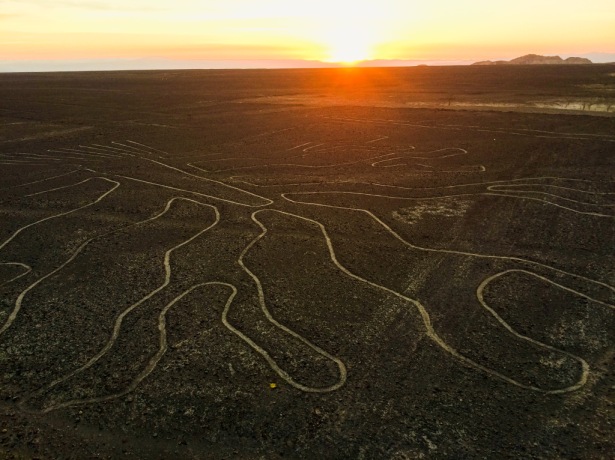
I made a quick stop in Nasca on my way to Huacachina, and I’d say that’s all you need. The major pull to this town are the Nasca Lines – Etched designs, carved into the dry desert ground, dating back a few millennia. To see the lines, you can book a flight tour to get the full experience, or you can climb one of the lookout towers to observe a select few designs (this is what I did).
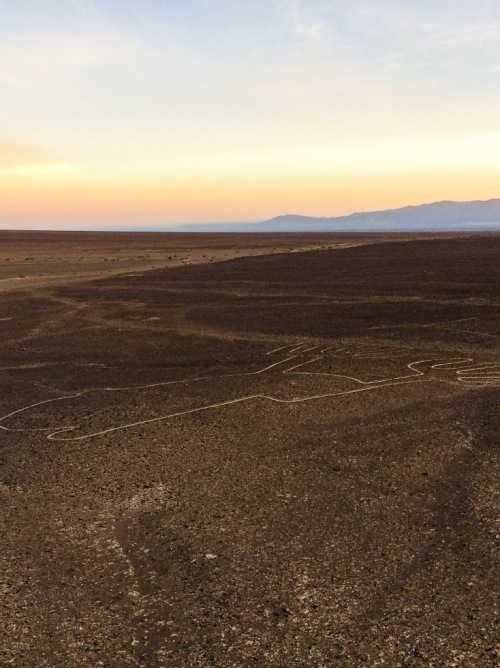
The area has been coined a UNESCO World Heritage Site, and for good reason, as these designs have stood the test of time. The reviews for the flyover tour are amazing, so if you have the time and the money, check them out. If not, I’d scrap it from the list of places to see. Out of all three – Nasca, Huacachina and Paracas – Nasca had the least to see.
HUACACHINA
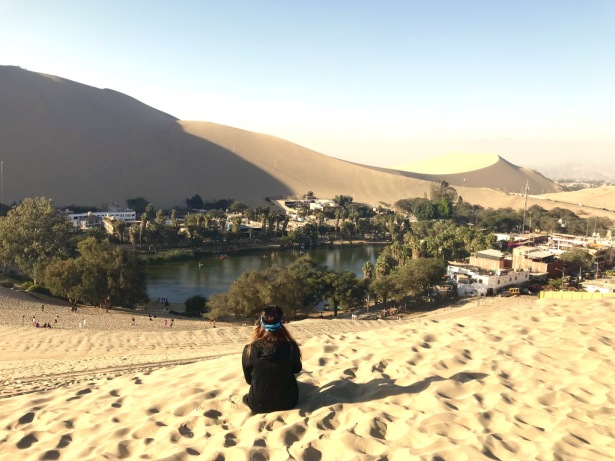
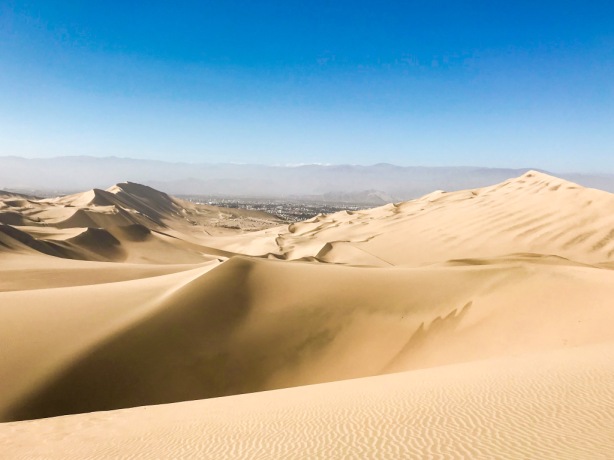
Further north up the coast is probably the cutest little town I ever did see – Huacachina. Not only does it have a name that is the most fun to say, it’s also the coolest oasis town. Never have I seen a community developed in such a neat place! The accommodations, shops and restaurants that make up this tiny town are nestled around a small body of water – an oasis – surrounded by picturesque sandscapes (a.k.a. sand landscapes). Huacachina is definitely worth hitting up!
ACCOMODATION
I only stayed in Huacachina for a few days, but I wish I stayed longer. There isn’t too much to do there, but I could have taken in those views unlimitedly. I stayed at Banana’s Adventure Hostel, which I highly recommend. A night’s stay is pricier than your average hostel, but it includes an activity for each night of your stay! It also includes breakfast, so…winning!
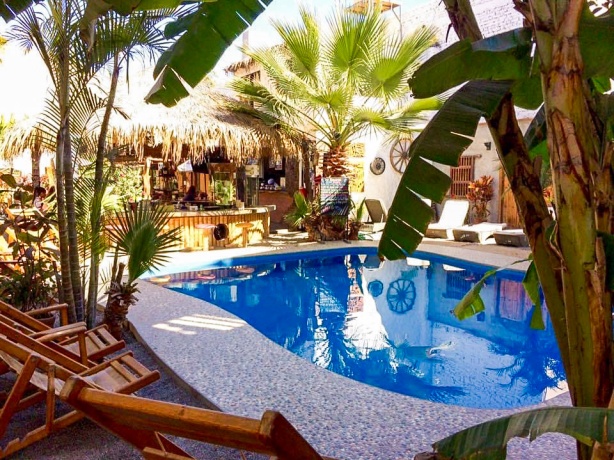
Banana’s has a pool to relax around and the cutest outdoor set up, with comfy lounge chairs, a tiki bar and a tropical menu. The food is really good, too!
THINGS TO DO
Dune Buggy & Sandboarding
This was one of the coolest experiences I had while in Peru. The brightly coloured dune buggies whip you around the desert and bring you to the top of some pretty gnarly hills to board down.
Board rentals are included in the price of the tour and are just a basic vessel to ride down on. The guides recommend you only go down the dunes on your stomach, and I would listen to their wisdom. From personal experience, sandboarding is NOT the same as snowboarding. It is much more challenging, and I may have walked away with a slight back injury from trying to be a hero and standing up on the board. Don’t be like me.
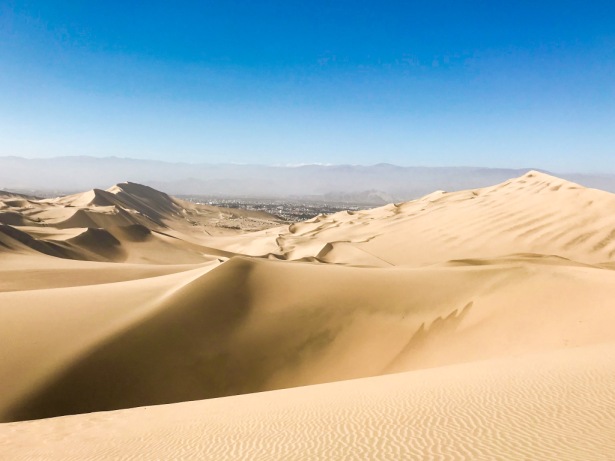
I do have to say that sandboarding was one of the most exhilarating yet terrifying things I have ever done. It’s one of those things that I only want to do once. Some of the smaller hills were fun, but when we got to the top of the larger hills, looking down was terrifying.
Going down was a whole other form of terrifying. It’s unbelievable how fast you are going. I stayed perfectly still on the descent. I felt like any false move would flip me over, and at that speed, end my life (dramatic, but true). By the time you get to the bottom, your shoes are completely filled with sand as well as your pants, shirt, hair, etc. Trust me when I tell you to wear long sleeves, socks and proper footwear – you don’t want to leave with sand burns.
Overall, sandboarding is something that you need to try once, and Huacachina is the place to do it!
Pisco Tour
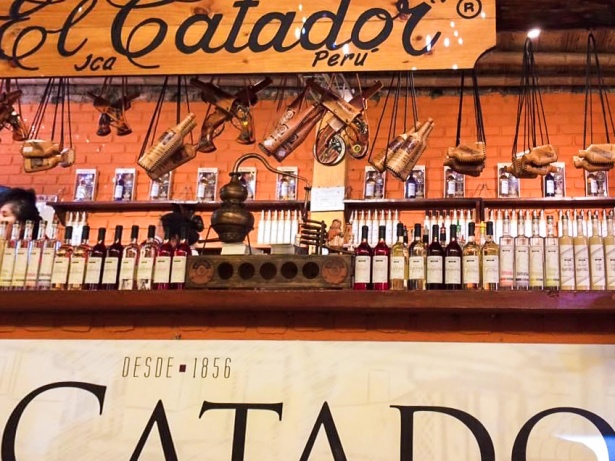
When in Huacachina, you have the option to visit the neighbouring city of Ica to experience a vineyard tour. This is a fun and relaxing day that I would recommend to travellers.
You are brought to a vineyard and taught the methods they use to make pisco (brandy) and wine. At the end of the tour, there is a (healthy) tasting and you can browse their shop to purchase your own spirits. It was interesting to learn the process locals go through to produce Peru’s most popular drink – the Pisco Sour!
FOOD
The food in Huacachina was surprisingly good. Two restaurants really stood out to me – Wild Olive Trattoria, and Banana’s hostel.
Wild Olive served the best pizza you could ask for after a day of sandboarding. The portions were big and the patio overlooked the water – what more could you even want? Highly recommend.
Banana’s, as stated above, had a great menu, especially for a hostel. They served up classics like hamburgers and fries, but also had vegan and vegetarian options.
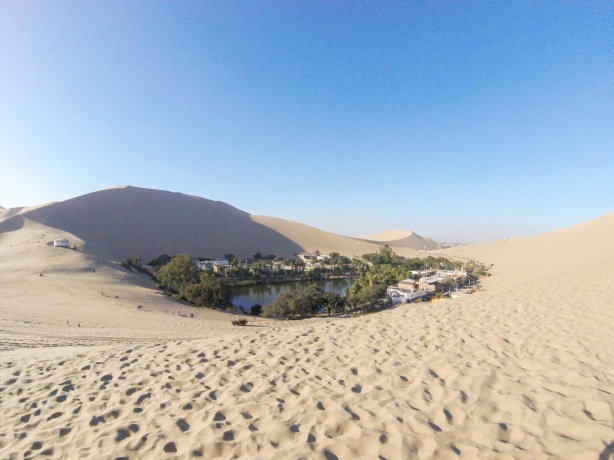
An amazing view, a fun adventure-packed experience, and great food…Check out Huacachina while in Peru!
PARACAS
Paracas is a cute little fishing town, just north of Huacachina, and right on the coast of the Pacific. It is mostly known for its “Poor Man’s Galapagos Islands,” or Islas Ballestas.
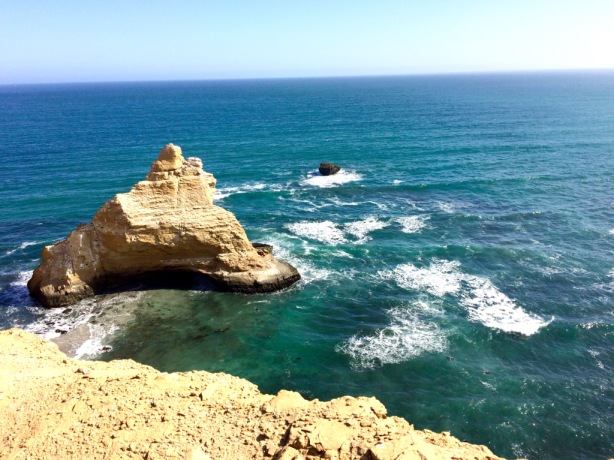
Although I enjoyed my stay in Paracas, I don’t think you should spend too much time there – one night is plenty! The town is small, and everything there is to do can be done in a day’s time.
ACCOMODATION
By far the best hostel in Paracas is Kokopelli. It is right on the beach, has a pool, a huge outdoor patio with tons of games, and it is just FUN. The dorms have their own little private pods with a curtain and there are lockers for your belongings. The outdoor patio has pool and foosball tables, an extra large bar, hammocks and the best sign that says “Wish you were beer.” I mean, how can you go wrong?
Oh, and they also provide kayaks and stand-up paddle boards!
THINGS TO DO
Islas Ballestas
I have mixed feelings about this trip. On the one hand, I feel like it was good to get out on the water (as this didn’t happen too much on my trip, despite Peru being a coastal country), and on the other, it just wasn’t what I expected.
Islas Ballestas was the VERY poor man’s Galapagos. I saw a shit-ton of birds and a few sea lions and that was it. It may have been the time that I was there (early August – Peru’s winter), or the day (very overcast and cold), or even my luck, but I just wasn’t too impressed.
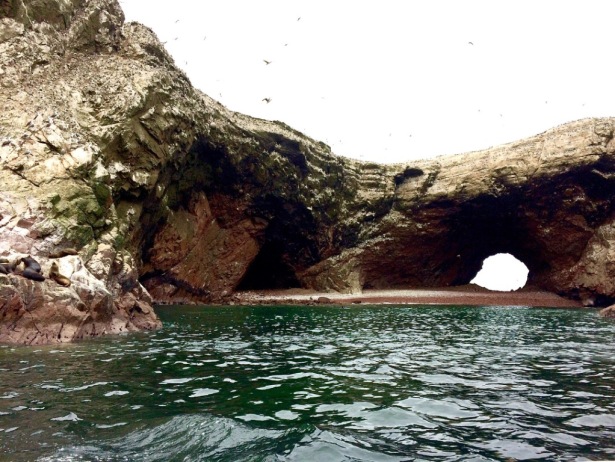
If the weather is nice when you are in Paracas and you enjoy being out on the water, I would say “Go for it!” You may get lucky and see some penguins or aquatic life, but know that you may also just be paying to be target practice for the hundreds of birds that inhabit in the area. Making memories either way!
Malecon El Chaco
This is a little pathway that runs parallel to the coastline. It hosts a number of restaurants and stores that overlook the water. It’s a cute little area to walk along, grab some grub, and watch the events happening on the water.
Other than that, there isn’t too much else to do in Paracas, but there are some neat day trips that you can take outside of the city! My top recommendation would be the Paracas National Reserve.
Paracas National Reserve
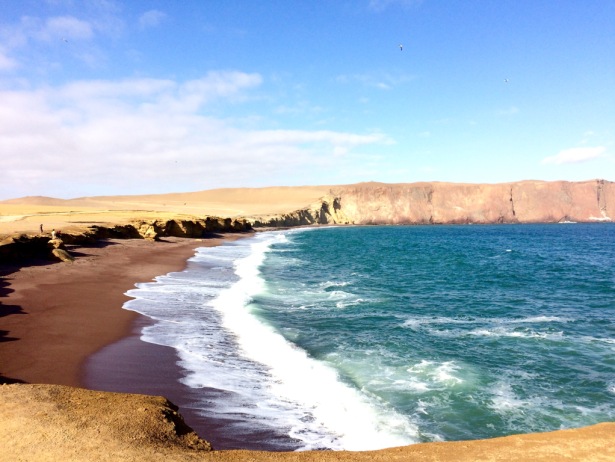
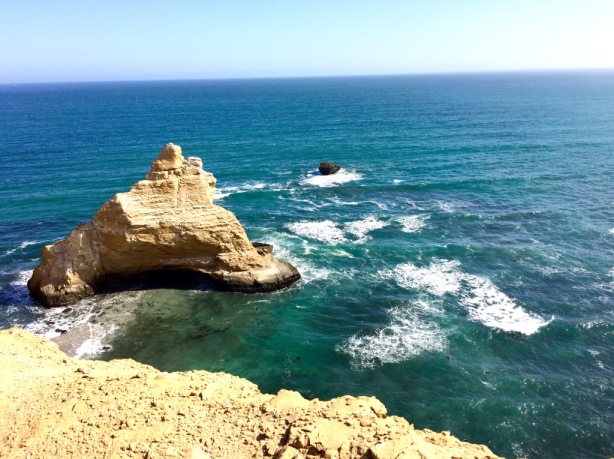
This is a protected, natural area just south of the town of Paracas. It is a gorgeous landscape where the desert meets the ocean. The waters are turquoise-blue and super picturesque. The reserve is also home to many different wildlife, as an extension of Ballestas, but I wasn’t lucky enough to see any while I was there.
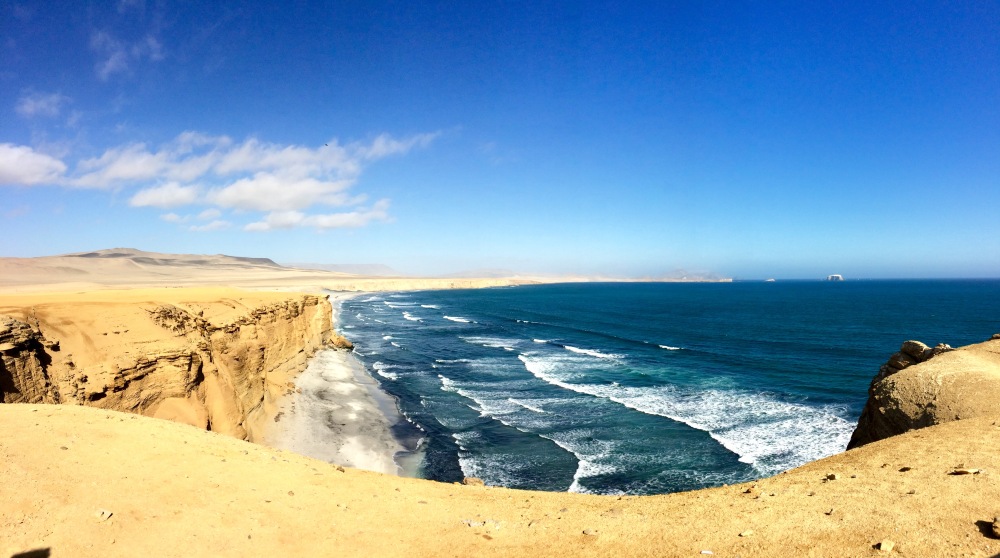
The Candelabra is another interesting spectacle located at the reserve. It is a candlestick-shaped geoglyph that has been etched into the side of one of the coastal ridges, dating back to 200 BCE.
Casa Hacienda San Jose
Another day trip includes this hotel, about an hour drive from the town of Paracas. The hotel, also known as the “slave tunnels” of Peru has a dark history, despite being a sight for sore eyes. It is currently opened to visitors to book rooms, but previously was a sugar and cotton plantation where slaves were smuggled in through the underground tunnels which connect all of the Haciendas in the area. Slavery was legal in Peru at the time, but the owners avoided paying taxes on the slaves by bringing them underground, immediately from the boats they arrived on.
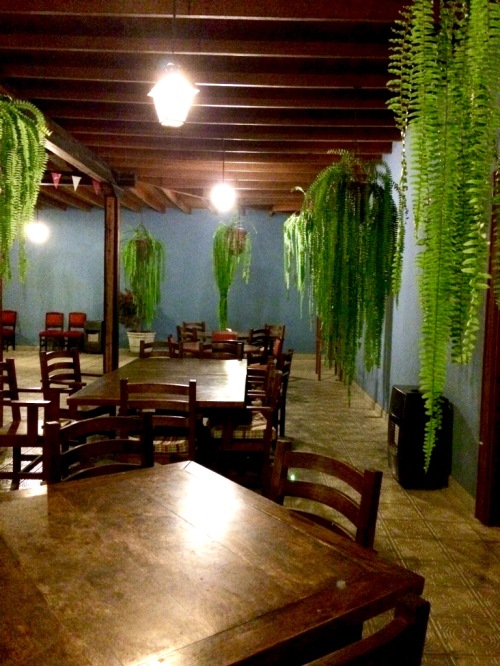
Through the Peru Hop tour I was on, we were able to enter the hotel without staying overnight. We went underground to check out the tunnels, many of which were a tight squeeze! It was creepy, to say the least, but fun at the same time. I recommend taking a quick stop on your way back to Lima to check it out!
Although it doesn’t take long to see it all, Paracas was a definite 10 on the cuteness scale and worth a quick stopover. Take a day to get a taste of life by the sea!
NASCA, HUACACHINA AND PARACAS – WORTH IT!
If you have time and enjoy a slower pace, check out Nasca, Huacachina and Paracas while you are in Peru! You only need a day or two for each place and the experiences offered at each are super unique and picturesque!
Go back to Southern Peru – A Backpacker’s Guide
The post Nasca, Huacachina and Paracas appeared first on Never. Not. Eating..
]]>The post Backpacking Arequipa and the Colca Canyon appeared first on Never. Not. Eating..
]]>Sitting at 2,335 metres above sea level, it’s the perfect place to take a (slight) break from the higher-altitude cities, like Cusco, Aguas Calientes and Puno.
The backdrop of Arequipa
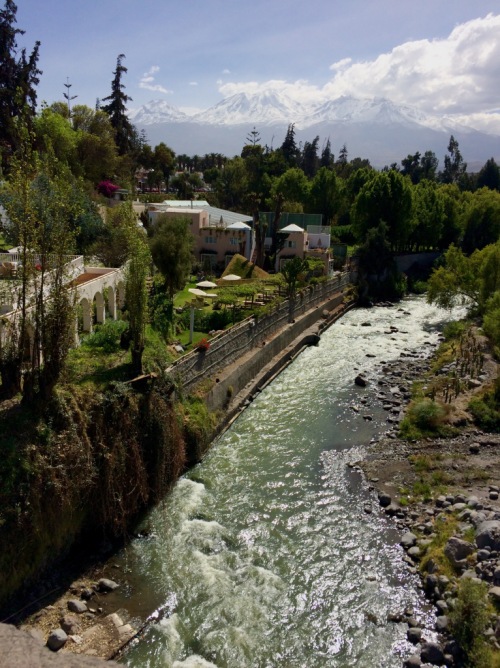
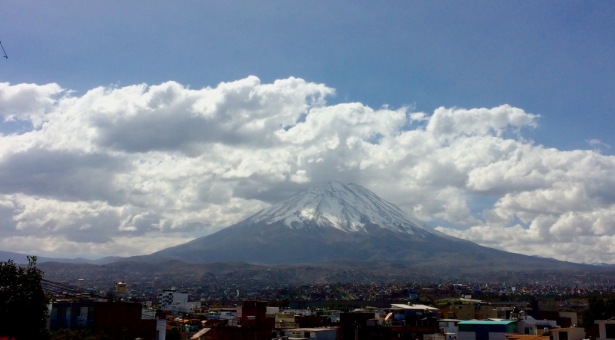
Arequipa is nestled amongst three towering volcanoes – El Misti, Mount Chachani and Pichu Pichu Peak. El Misti, meaning “The Gentleman” in Quechua, is by far the most well-known. You can hike Misti to acquire some breathtaking views at the summit, which takes two days and sits at 5, 825 metres above sea level.
WHERE TO STAY WHILE BACKPACKING AREQUIPA AND THE COLCA CANYON
As Arequipa is a fairly large city, there are a number of different places to stay while visiting. I stayed at Yes! Arequipa Hostel which has it’s pros and cons.
Pros
The hostel had a few different options for bedrooms. You could stay in dorms, or private rooms. I opted for a private room, which I don’t typically do, but sometimes you need to treat yo ‘self. The room was spacious and clean. There were a few large private bathrooms nearby which were nice to have.
The hostel also had a pretty good (free) breakfast available as well. The workers helped me book a tour to Canyon del Colca, and they stored my bags while I was on the tour.
Cons
It was about a 10 minute walk from the main square. I didn’t mind this so much, but if you want to be in the middle of the action, I would suggest a different accommodation. I found it difficult to socialize and meet people at this particular hostel.
HOSTELS IN AREQUIPA
If you are looking for a different experience, the following are a list of hostels to check out, depending on your preferences:
- Positive Hostel – A GORGEOUS colonial mansion with bright-coloured walls and dorm rooms. Three blocks from the main square with views of the mountains.
- Bothy Hostel – Three blocks from the main square, a chill hostel during the week and more partyish vibes on the weekend. It has a number of fun activities to take part in, such as ping pong and a pool table.
- Way Kap Hostel – A chill hostel with some great common space areas to hang out in and meet like-minded travellers. Located in the historic centre and close to the main square.
- Arequipay Backpackers Downtown – If you are an active yogi, check out this clean and friendly hostel. They offer a gym on-site, yoga classes, ping-pong, a pool table and many other services.
FOOD
Tradicion Arequipena – If you are looking for a traditional meal at a decent price, try Tradicion Arequipena. You can sit in the garden, eat with a view and listen to traditional Peruvian music.
Zingaro Restaurant – Another traditional Peruvian restaurant nestled inside a building with the cutest decor and rustic appeal. Enjoy common dishes, such as Rocoto Relleno (stuffed peppers), quinoa soups, cuy (guinea pig) and alpaca.
El Buda Profano – If you are looking for something different, try this Japanese joint that serves up vegan sushi. Fun, delicious and a change when needed!
Capriccio – In need of something sweet? Check out this pastry shop, cafeteria and ice cream parlor! They serve up cakes, alfajores, profiteroles, and more delicious treats. The perfect mid-day snack.
THINGS TO DO WHEN BACKPACKING AREQUIPA AND THE COLCA CANYON
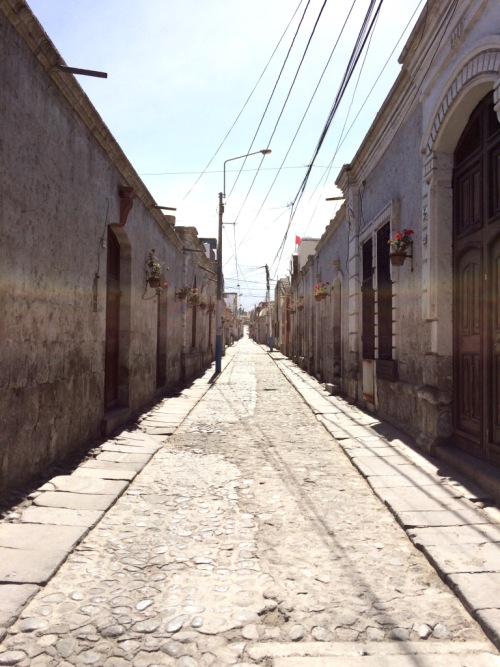
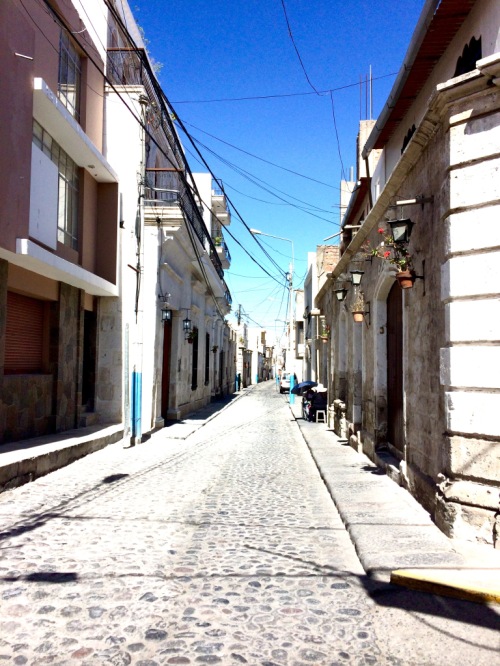
Walk around. Seriously, this city is so beautiful and sometimes the greatest adventures are getting lost in the streets of a city you don’t know. Similar to Cusco, the streets of Arequipa were breathtaking. Whether you are hanging out in the main square or crossing the river to the Yanahuara Viewpoint, you won’t be disappointed with the views.
Plaza de Armas, Arequipa
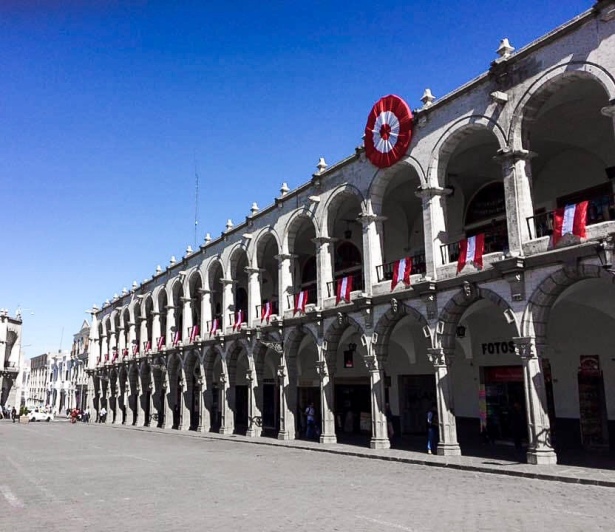
The Plaza de Armas (main square) in Arequipa is a stunning vision. Cathedrals, shops and balconies made from sillar (white volcanic rock), give this place it’s nickname, “The White City.” Visit the basilica cathedral while you are there – it is an impressive feat that spans the length of the plaza and is the subject of beautiful photos.
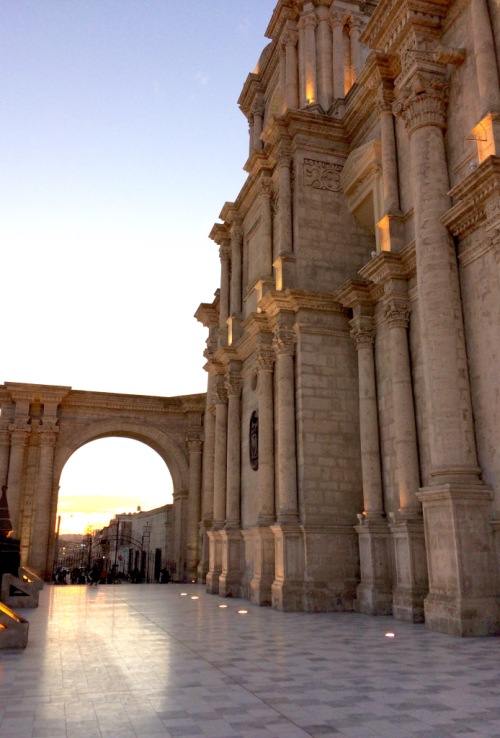
The historic centre of Arequipa has been named a UNESCO World Heritage Site, so naturally, there is a lot of eye-candy happening when you arrive. The main plaza is bustling with locals of all ages. Walk around, or find a spot on a bench to watch the exchanges and embrace the culture.
From the plaza, head north to see the Monasterio de Santa Catalina, a stunning convent that fuses both Spanish and Native architecture.
After checking out the monasterio, head northwest to the Yanahuara Viewpoint. Cross the Rio Chili to arrive at an arched platform that looks out onto the city below. Views of Mt. Misti are worth the 25-30 minute walk to get here.
THE COLCA CANYON
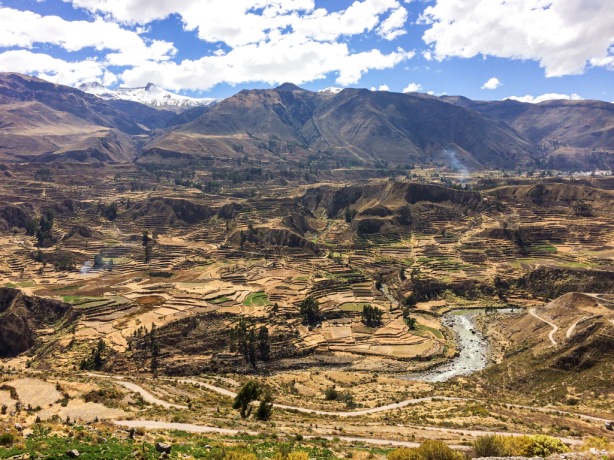
This is a MUST if you are staying in Arequipa. You will likely be able to book a tour to the canyon from your accommodation, and if not, hit up one of the tourist shops around the city to help you out. This was one of my favourite excursions in Peru. It is one of the deepest canyons in the world and is carved out by the Colca River.
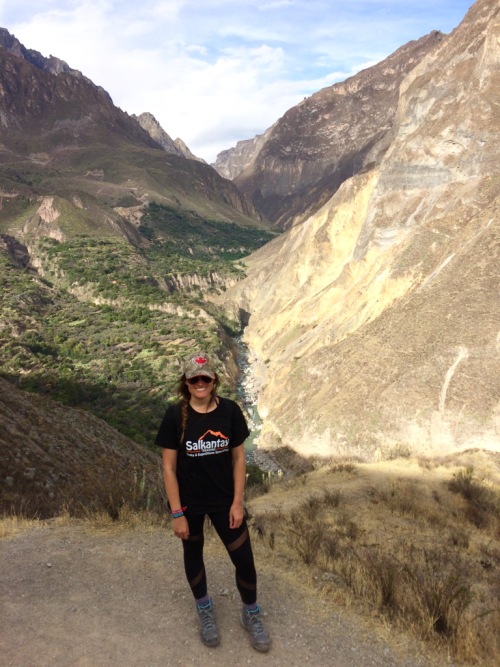
I decided to do the 2-day trek, which was both challenging and extremely rewarding. It was a reasonable price for what was included. Upon arrival (after a lengthy bus ride from my hostel in Arequipa), we spent the entire first day hiking down the canyon to the very bottom. The descent was long and after a while, it took a toll on your knees, but we survived!
THE OASIS IN COLCA CANYON
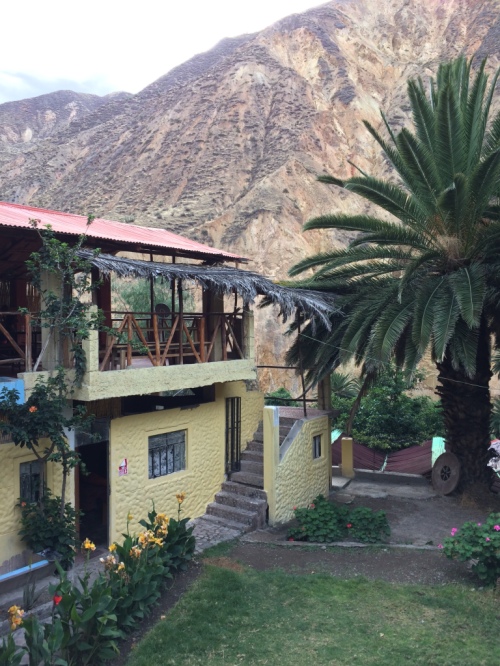
At the bottom of the canyon, we crossed the river and enjoyed a local lunch before climbing back up part of the other side to an oasis, where we stayed overnight. The oasis was a very basic accommodation with a pool and a small restaurant that served up some yummy (and well-earned) spaghetti for dinner.
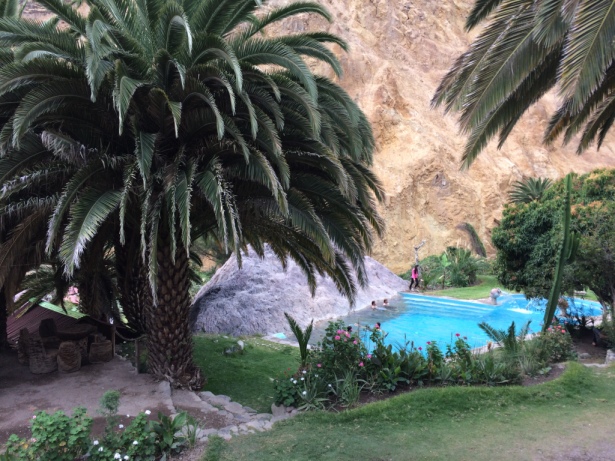
The rooms at the oasis were nothing special. There was no electricity and the toilets were outside and shared by all of the guests. Checking your bed for critters, including little scorpions, is a good idea. We only stayed here for one night, so the experience wasn’t too bad.
HIKING UP THE COLCA CANYON
The next day, we started hiking back up the canyon at 5:00 a.m. Headlamps are needed for this hike to see where you are going. I won’t lie – the uphill hike was extremely challenging. The winding path upwards was met by a number of large stones that required a lot of effort when nearing the top. My leg muscles were bangin’ after this hike.
The tour guides give you three hours to get up, and if you don’t think you will make it in that time, you can rent a horse/donkey to take you the rest of the way (or from the beginning). I climbed it in just under two hours, so it is completely doable if you are an active person who hits the gym every once in a while.
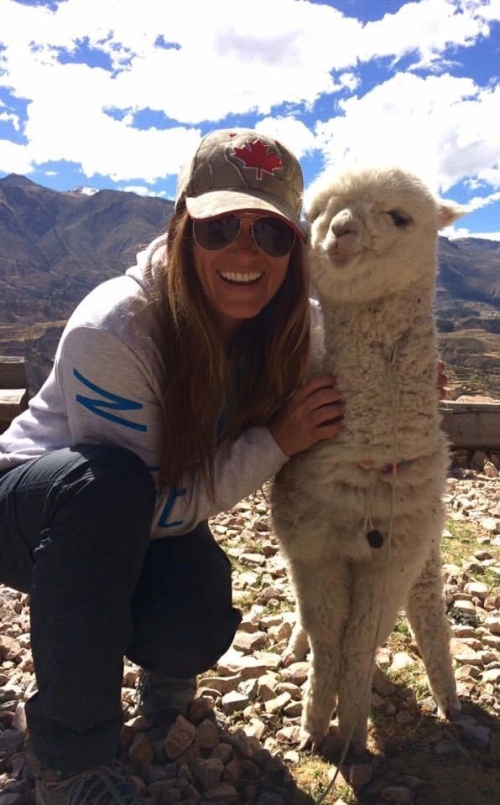
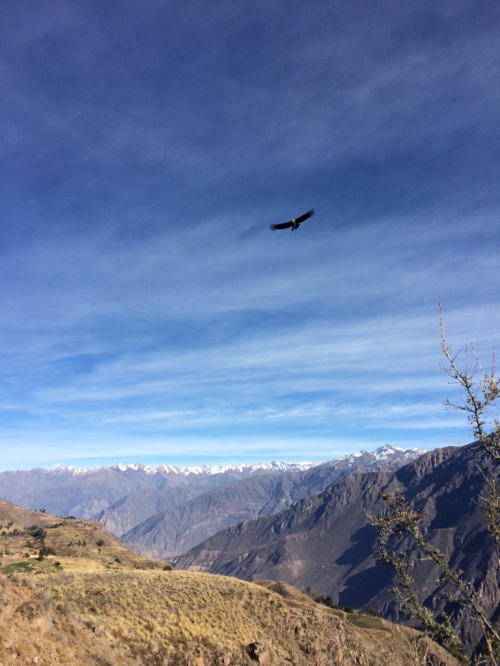
At the top of the canyon, there are a few lookout points where you will likely stop on your first day. The view is gorgeous. The canyon is home to the Andean Condor – which has an impressive 3-metre wingspan. They fly up from their nests every so often, so keep an eye out when you are at the top!
Like I stated earlier, this hike was well worth it. You will take in views you’ve never seen before and get in a respectable workout. Our crew went out on the night we finished the hike and all of us downed our own extra-large pizza with ease. We likely could have eaten two, with the calories burned over the last few days. Best. Hike. Ever.
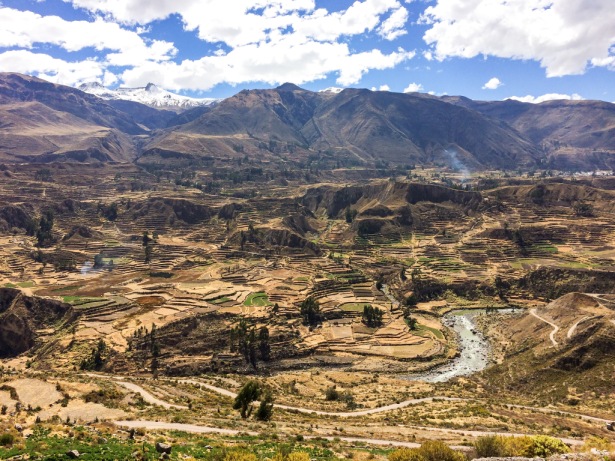
Different from any city I’ve ever been to, Arequipa is well worth the trip from Lima or Cusco. Set aside 5-7 days to experience backpacking Arequipa and the Colca Canyon. Roam, hike, eat and take in the views of this amazing “White City!”
Head back to Southern Peru – A Backpacker’s Guide
The post Backpacking Arequipa and the Colca Canyon appeared first on Never. Not. Eating..
]]>The post Puno on Lake Titicaca appeared first on Never. Not. Eating..
]]>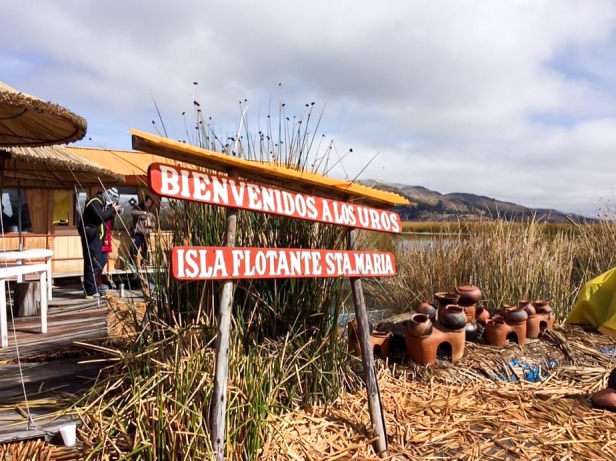
The city: There wasn’t too much going on when we arrived in Puno. It seemed like a standard small, quiet town. The city is nestled on the coast of Lake Titicaca, and is a connecting point between Peru and La Paz, Bolivia. It is known for its festivals and celebrations, however, we did not see too much during our few hours there.
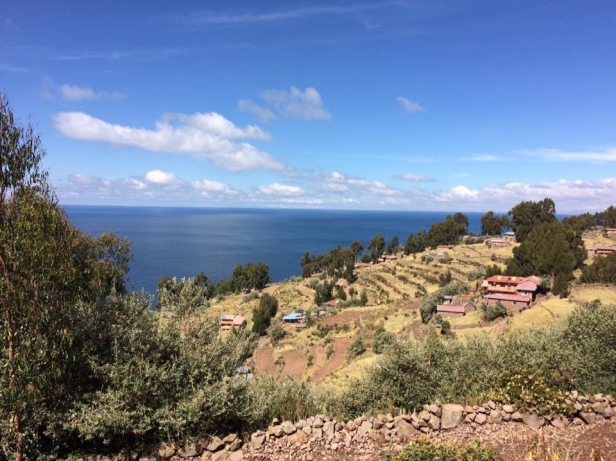
The Lake: Lake Titicaca is spectacular. It is the largest lake in South America and the “highest navigable lake” in the world, sitting at 3,812 metres. Be sure to explore it for a day if crossing over into Bolivia, or dipping to the very south of Peru.
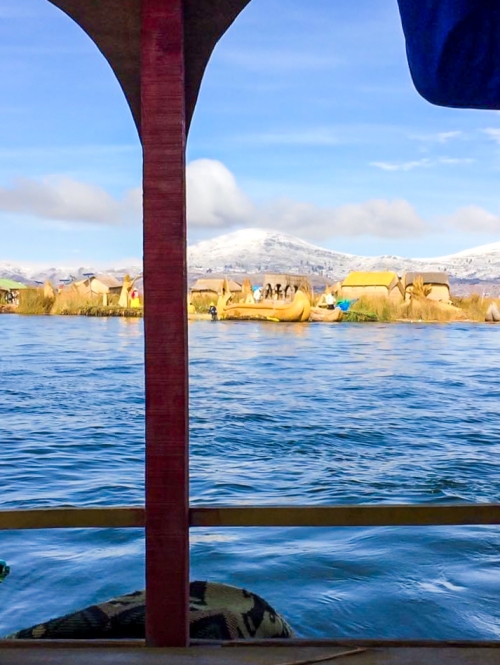
The lake is home to the Uros Islands, or the famous “floating islands” of Peru. I can’t even put into words how amazing these little islands are. Completely human-made, they house around 400 local families, who live off of the water and rely a lot on tourism. To get to the islands, you must take a boat from Puno, which takes approximately 20 minutes. Once you arrive, the locals are welcoming and hospitable. When we got to one of the islands, we were able to get off of the boat and explore, talk to the locals, enjoy the souvenirs they had available and we were even invited into one of the family huts. The islands are made entirely of totora reeds from the lake that have been carefully woven together. It was quite impressive. You can also pay a bit extra to take a ride on a boat, made of the same reeds, to some of the other sights close by.
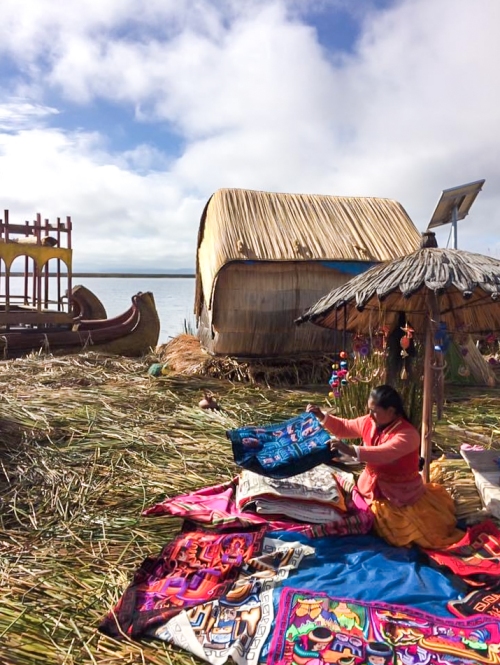
If you travel to learn, grow and experience new things, I would highly recommend visiting the floating islands. They will open your eyes to a way of life that you won’t believe is real!
The post Puno on Lake Titicaca appeared first on Never. Not. Eating..
]]>The post Cusco and the Sacred Valley appeared first on Never. Not. Eating..
]]>
I flew from Lima to Cusco, which I highly recommend. Flights take about an hour and a half and cost roughly 80-90 CAD dollars (60-70 USD). Cusco’s small international airport – Alejandro Velasco Astete Airport – is no fuss. It’s a quick little hop and once you land, grabbing your bags and exiting the airport is a breeze. You can find taxis waiting outside, or you can take a bus to your accommodation, which is much cheaper. You will likely need to find a bus that takes you to Plaza de Armas, the main square in Cusco.
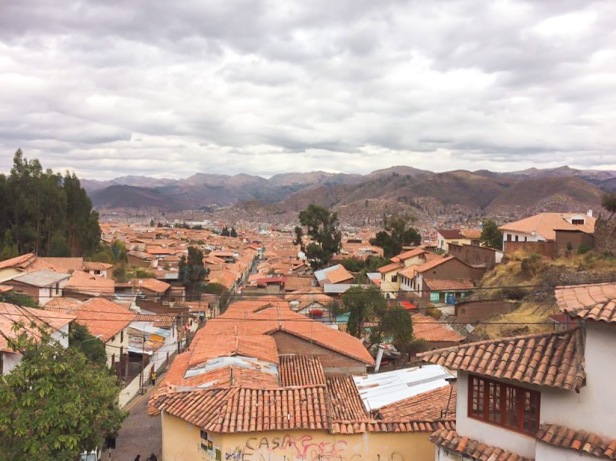
If Cusco is the beginning of your trip, or you are arriving from Lima, it’s a good idea to avoid planning events on the first day of your arrival. The altitude is so high (3,399 metres/11,150 feet) that it really does take some getting used to. For someone who never gets headaches, I had one for the entire first day. The air has less oxygen, and therefore you need to become acclimatized. Most hostels and hotels, as well as restaurants, serve té de coca (coca tea), which is tea that has been derived from the Coca plant and is widely used to help with altitude sickness and discomfort. I drank it every day. You will also notice that many stores sell products with coca in them, such as candies and the leaves themselves (which you can chew on instead of drinking the tea). I recommend taking in the city on the first day – walking around, finding some eateries and just taking it easy. This is especially a good idea if you plan to hike to Machu Picchu while you are there. Oh, and try to avoid alcohol while you acclimatize. Alcohol interferes with the body’s ability to absorb oxygen, and since it’s already lacking in the air, it’s not the greatest idea to drink it when you are trying to get used to the altitude. I know, it sucks.
Accommodations:
There are so many great hostels in Cusco. I stayed in a few while I was there.
Supertramp – Firstly, Supertramp. Yes, great name, I know. This hostel is GOALS. The view is incredible, which is why many backpackers choose it. Perched on top of a hill, it looks out onto the entire city, and a view like that never gets old. Eat your breakfast while looking through the gorgeous large windows in the lounge area, or just chill on one of their cozy bean bag chairs with a book.

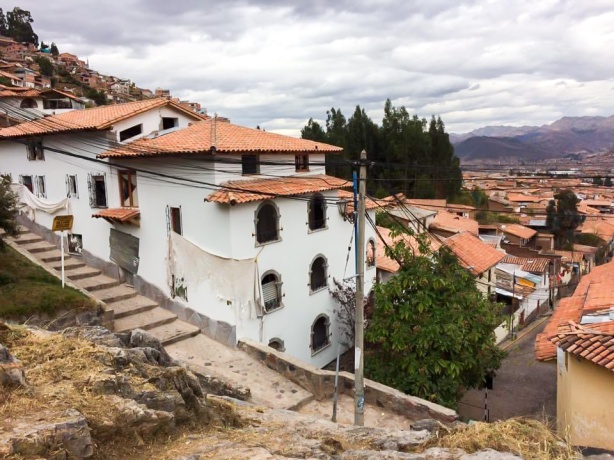
Let’s talk about the negatives of this hostel first, just to get them out of the way: It’s location is at a high point in the city. Meaning, you need to climb a lot of stairs to get there, which I didn’t find too bad, but with the altitude, it was sometimes difficult. The night I arrived (on my first night in Cusco, not yet accustomed to the altitude), I remember my taxi driver pulled up, grabbed my bag from the trunk and practically ran up the hill while I was left behind huffing and puffing trying to climb the stairs. He probably waited at the top for a few minutes until I arrived…Poor guy. The high location of this hostel also meant it was cooler here at night. And, since hostels don’t typically have heat, I froze in my top bunk each night (as I visited Cusco in July, Peru’s winter). I literally had to sleep in a toque and mitts to gain any sort of comfort. Finally, it is a bit far from the main square, which again, I didn’t necessarily mind, because I LOVED walking the streets of Cusco. Those are the only downfalls that I can think of, because overall, this place is amazing.

Supertramp is a burst of colour and ‘coolness.’ The staff were all young and friendly (many of them speaking little English, which I always consider a plus as it makes the experience more authentic and excitingly challenging). The buildings exterior and interior are covered with bold paintings created with the brightest hues. It brings a lot of character and style to the hostel. The rooms continue with this bright theme, as the beds are privatized by colour-themed curtains and matching geometric wall patterns. It also has a little seating area in front of a large window on your way to your bunk, where you can read with a view or play games with other guests.
One feature I always look for when booking a hostel is that breakfast is included. Supertramp’s breakfast was basically bread with a few different spreads, including butter and jam. They also served juice and coffee. It’s definitely carb-forward, but they had many great menu choices that you could opt for if you wanted to spend the money. They also served dinner later on, one of the best soups I had while in Peru!

Overall, Supertramp is a great place to stay. It has a certain “calmness” about it that creates more of a “chill” vibe for it’s guests. I would recommend checking it out for at least one night while in Cusco.
Nao Victoria – Equally amazing was the Nao Victoria Hostel. This accommodation is more central, located just steps away from Plaza de Armas (the main square). Alike Supertramp, Nao Victoria had some seriously cool artwork that helped define it. Unlike Supertramp, it’s style was more Victorian, hence the name. When I think back to my time at this hostel, it’s only good memories. The people were so nice and helpful.

I was really sick for a few days while in Cusco, and the Australian who co-owned this place brought me back to life with his amazing restaurant menu, including the best avocado toast I have ever had. It is a quieter place with comfortable beds, an artistic atmosphere, a funky lobby and some really cool vibes.
The dorms were clean, comfortable and private. Each bed had a curtain, a light and a charging socket. Some rooms had private bathrooms and others had ones just outside the room that were also private. There was also a communal bathroom with showers.

A bonus was that it also included free breakfast. And as already mentioned, all of the food was amazing.
If you are looking for more options, here are some of the highest rated hostels in Cusco, with a bit of what you can expect if you book there:
Puriwasi – A safe, friendly hostel with a social vibe and only a few blocks away from the main square.
Pariwana – A clean, party hostel that offers free breakfast and a large open terrace. They provide theme parties and daily happy hour. Free earplugs too – BONUS!
Kokopelli – Highly rated and it’s clear why. A true ‘traveler’ vibe – Not too party-ish, but a great place to meet people! Also, they have many fun games such as a pool table and foosball.
Hospedaje Turistico Recoleta – A small hostel with max. 4 beds to a dorm. Home to a lot of little ‘nooks’ to read, chill or meet people in. Breakfast included.
Food:
Quite honestly, I didn’t find Cusco to have the best food. It may be because I got very sick off of the food here, and apparently, parasites are common (according to a local and many other travelers that experienced the same thing while in Cusco).

My recommendations would be to stick with foods that are cooked and avoid foods that may be washed with the water, such as fresh fruits. There are many restaurants in Cusco that offer soups (especially quinoa) that may be a safe bet. Here are some restaurants that I would recommend:
Yaku Cocina de Altura – A place to go to enjoy local food. They serve up popular Peruvian dishes such as Lomo Saltado (steak and french fries), cuy (Guinea Pig) and ceviche.
Organika – A healthier joint that offers vegetarian and gluten-free options.
Chakruna Native Burgers – If you are looking for comfort food, check out the burgers at Chakruna. They have a number of different options, including an alpaca burger and a vegetarian quinoa burger!
Things to do:
Where do I begin?! Cusco has countless adventures to go on each day, many of which are walkable and others that require a few hour drive.

Walking around Cusco is never boring. It’s cobblestone streets and mountainous landscape make it extremely picturesque. One of my favourite things to do when I wasn’t taking lengthy day trips was to just walk the streets, exploring and getting lost. I ended up finding my favourite place in the city this way, Mirador de San Cristobal, which I frequently visited for the outstanding panoramic and instagrammable photo-ops. This is a church with a large, open “lookout” where I spent a lot of my downtime, just chilling and absorbing the gorgeous views, especially at night when the city was all lit-up. I didn’t actually go into the church, but the inside looks stunning as well. There are benches on the lookout where you can sit and take in a perfect glimpse of Plaza de Armas. I would say it sits in the middle of the lowest and highest points of Cusco, making it a bit easier to get to than my next need-to-see place – Cristo Blanco.

Cristo Blanco is like a miniature version of Christ the Redeemer, in Rio, Brazil. It sits atop the city, overlooking it with arms wide open. I knew I wanted to visit it before I left Cusco, but as a backpacker, I didn’t want to pay for the price of admission (you need to purchase a Tourist Ticket of Cusco, which gives you access to Saysaqhuaman, the ruins next to Cristo Blanco). The ticket also gives you access to a few other popular attractions in Cusco, but goes for 130 Sols, or $50 CAD/$37 USD, so instead, I found a way of walking up, and it was 100% free. Well, originally, I tried walking up by myself, just letting the overarching view of the structure guide me, and that was a flop. I couldn’t find out how to get up there and none of the locals seemed to understand my broken Spanish (I don’t blame them)! Luckily, I ran into a few wonderful humans at my hostel, overheard them talking about going up, and asked if I could join. Evidently, the passage up was right beside the hostel we were staying at (Supertramp), but you would never know it. We fought our way through a forest on a steep uphill climb. It was a tricky hike with the altitude, but after about 20 minutes, we made it. And, let me tell you, the view was amazing! As stated already, Cusco is probably the most beautiful city I have ever visited, but even better from the top of that hill.
The greatest part about discovering the free path to Cristo Blanco was also that we were able to check out Saqsayhuaman on our way back (via the more traditional, mapped out route). Located at 3,700 metres (12,140 feet) above sea level, Saqsayhuaman is a complete mystery. Thought to be an old fortress, Saqsayhuaman is an impressive architectural feat made up of massive stones that have been carefully fitted together. It is a true depiction of the impressive stonemasonry of the Incas.

Moving along with our walking tour, another neat place to hang out is, of course, Plaza de Armas – the main square in Cusco. You will likely walk through it many times, taking in the beautiful cathedrals and constant flow of people. The main square is surrounded by a number of different restaurants (including your standard McDonalds and Starbucks). It is home to a number of vibrant gardens and many cultural events. While I was there, I also witnessed many protests led by locals, which were always peaceful.
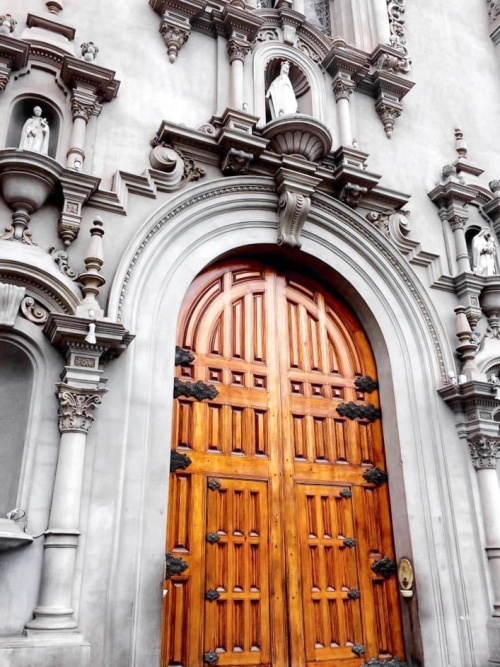
Two main attractions at Plaza de Armas are the Cusco Cathedral and Iglesia de la Compañía de Jesús – two stunningly beautiful churches that embody the Baroque-style of grandeur architecture. They are both worth a visit, or at least a dedicated few minutes to sit on the steps and soak up the beauty of the buildings’ facades.
Heading over to the opposite side of the city, you will find San Pedro Market – A definite must-see. The market is quite large and is about a ten-minute walk from Plaza de Armas. There, you will find countless food vendors, juice stations and many, many souvenirs that you can pick up for friends and family. It is a straight hustle of workers trying to sell you their food/drinks and a mash up of different local products. Be selective when choosing what to purchase – food-wise. I’m quite certain I was sick off of one of the fruit juices I had here…Make sure they use bottled water!

What I did love about this market was simply walking through and looking at all of the different stalls and what they had to offer -many of which were the same. I purchased a beautiful, “Alpaca Soft” blanket from here, which is the only souvenir I bought for myself while in Peru, and it was worth it! It’s important to note that you can bargain with the vendor owners and try to get them to lower their prices, often they will as they are competing with the others around them.
There are many other interesting sights to see when walking the streets of Cusco, and I highly recommend taking a day or two to just explore and visit the different ends of the city. A few more worthwhile visits include:
Choco Museo – Pop in and check out how this company uses Peruvian cocoa beans in yummy and unique ways. You can also sign up for a workshop to make your own chocolate treats!
Museo de Arte Precolombino – A pre-Columbian art exhibit that showcases a number of different artifacts from thousands of years ago.

Palacio de Justicia – A gorgeous courthouse located in Cusco’s historic centre. Worth a quick walk-by, just to take in the views.
Day Trips
Aside from all of the places to visit within the city, Cusco is also a direct link to a number of other worthwhile sites. Obviously, Machu Picchu is the most popular, however there are so many other day trips that should be experienced while here.
Firstly, Rainbow Mountain. The name says it all – an extremely gorgeous spectacle that captures the eye with it’s stripes of colours formed from mineral deposits and glacial melting. I was juggling whether or not to make the day-long journey, and after much thought, I decided…por que no?! Or…why not? And then, I got sick and it sadly eliminated two days off of my trip in Cusco, leaving me no time to make the visit to Rainbow Mountain. Although I don’t have the experience to tell you firsthand about this landmark, I did do a lot of research on the mountain when I was debating whether or not to go. So here is what you need to know:
- Rainbow Mountain sits at 5, 200 metres (17, 060 feet), higher than both the city of Cusco and Machu Picchu, meaning you need to be prepared. Do NOT think that you can show up in Cusco and hike Rainbow Mountain the next day. Your body will need time to acclimatize or else you will likely experience severe headaches and altitude sickness. The tour operators have oxygen and first aid on-hand in case of emergency.
- It is a full-day excursion. Regardless of the tour you book, you will likely be picked up early in the morning (4 or 5 a.m.) to start the trek. There is a lot of driving to get to the mountain, often with a stop for breakfast on the way there and lunch on the way back. The hike itself will take anywhere from 1 to 2 hours with no more than a 20 minute stay at the top. The descent adds on another 45 minutes to an hour.
- There is an option to ride a horse to the top if you are struggling to complete the hike, but these often cost a lot of money.
- Rainbow Mountain Travel offers a tour for $30 USD, which includes pick-up, a guide, entrance into the Rainbow Mountain park, a first aid kit and oxygen tanks for emergencies.
Overall, if you can squeeze it in, you should. The landscapes are incredible and you will have gorgeous photos to prove it!
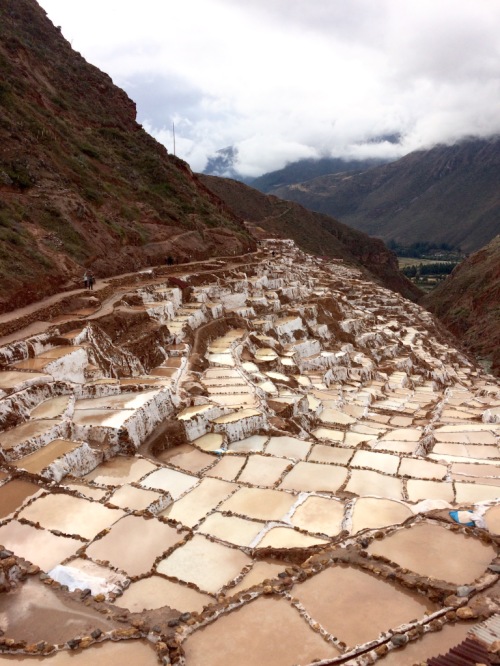
Salineras de Maras and Moray are two more worthwhile trips to take out of Cusco. Salineras de Maras, or the salt mines of Maras, are a must-see. The pictures don’t do this place justice. Visit this insane landscape to take in thousands of salt pools carved into the side of a mountain. Here you can walk amongst the labyrinth of wells, stick your finger in one and taste the immense saltiness of the natural springs. Salineras de Maras also has a number of gift shops that sell salt products, which you should definitely check out. I purchased a few small bags of pink salt, as well as some salted chocolate and I wish I bought more. It is some of the best salt I have ever had. Worth it!

Moray is close to Maras, and it boasts a collection of circular-shaped terraces thought to have been built for agricultural purposes. As you move up from the central (lowest) part of the site, the temperature drops significantly, making it a perfect place to test how certain crops grow in different types of weather. Often, tours here will also include a stop at Maras to see the salt mines. I took a tour that included a full day on a quad with a few fun stops on the way. This is a great way to spend a day close to Cusco!
Machu Picchu
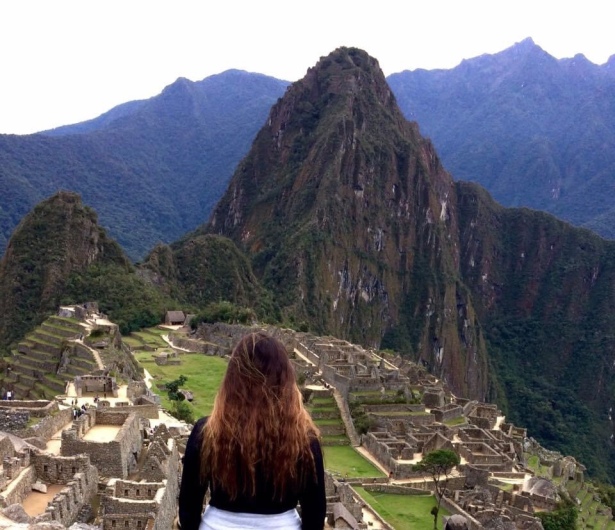
Let’s talk about Machu. This place is magical. Somehow, when I was there, surrounded by tourists and visitors, I felt a sense of calm wash over me. If you do get the opportunity to visit, you will notice many people (of which many were fast asleep and snoring loudly) relaxing on the hills found around the ruins. I truly believe that aside from likely being exhausted from making the trek to Aguas Calientes, they were enjoying the peaceful atmosphere and complete serenity that surrounds Machu Picchu.

How to get there: You have a few options when traveling to Machu Picchu. There are several hikes that leave every day from Cusco to Aguas Calientes (the connecting city beside Machu Picchu). The two most popular are the Inca Trail and Salkantay Mountain. The Inca Trail is a 4-day hike that takes you through historical sites and diverse scenery. It is known to be an easier trek than the Salkantay trek, which boasts beautiful mountainous views, higher altitudes and more kilometres. Salkantay is the more challenging hike, so if you are looking for a great workout, opt for that one. I started the hike on Salkantay, but unfortunately got really sick and had to cut it short.

If hiking isn’t your forte, you can always take the train into Aguas Calientes. I ended up doing this once I recovered and was ready to try again. I took a cab into a town called Ollantaytambo (about an hour from Cusco) and from here, boarded the Peru Rail. Tickets were pretty expensive at S/ 385, or $140 CAD ($108 USD) roundtrip. Granted, the seats are comfortable and some of the trains provide a snack each way. I purchased my train ticket the day before and it wasn’t a problem, but I would still suggest purchasing ahead of time, just in case.
Getting to Machu Picchu from Aguas Calientes: There are two tickets you can buy for entrance into Machu Picchu – The morning shift (6 a.m. to 12 p.m.) or the afternoon shift (12 p.m. to 5:30 p.m.). I suggest the morning shift. Be ready to wake up super early. If you are a backpacker, this is probably the norm for you, especially in Peru. Everything starts so early because it takes a long bus ride to get to most places in the Sacred Valley. Buses start running from Aguas Calientes to Machu Picchu at 5:30 a.m., but there is always a massive line earlier than that to get on the first few buses. Buses go up every 15 minutes and the ride up takes about 20 minutes. Alternatively, you can hike up, which takes just over an hour. The citadel opens at 6:00 a.m., and if you can get there by then, you may be blessed with a gorgeous sunrise…depending on the weather. When I was there, the clouds were so low (or the landscape so high) that I didn’t get to take advantage of what could have been a stunning photo op. It all depends on the day.

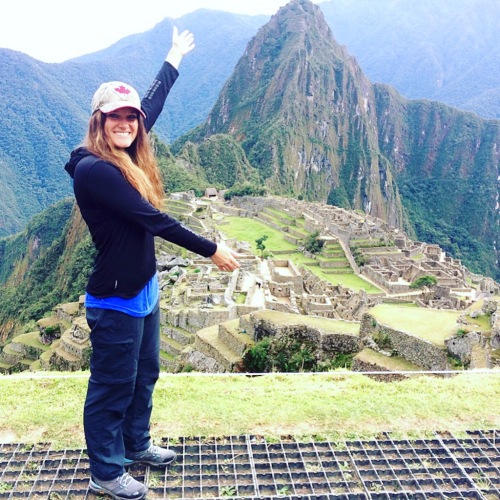
When you get there: Right before entering, make sure you grab a stamp on your passport saying you have been to Machu…It’s free! Once you get into the citadel I would recommend taking in the view from an area that is just below a little “guard house.” This is a very “Instagrammable” location that has the perfect view of the citadel. Grab all your pictures and lay out on the grass for a bit to enjoy the view and the serenity before heading down into the actual ruins.
As you move about the ruins, pay attention to the architecture and the way the builders developed the city. You will notice how logical the placement of certain things are, like the windows, where they take advantage of the sun from the East, and the stones, which have been fitted together perfectly and have lasted the test of time. To be in a place that dates back to so long ago is truly an out-of-this-world experience.

If you enjoy hiking and want an even better view of the citadel, make sure you purchase a combination ticket that allows you to visit either Huayna Picchu (Young Mountain) or Machu Picchu Mountain (Old Mountain). Huayna Picchu Mountain is a steep climb with many large stone steps. It is a fairly challenging hike, with narrow paths, tight staircases and rock tunnels. Machu Picchu Mountain starts out wider and at an easier slope, but then becomes a steeper climb as you ascend. It is also at a higher altitude compared to Huayna Picchu. Both are worth the view if you are up for the added challenge.
Getting Home: If you are taking the bus home, prepare to wait in another long line. Luckily buses are constantly making the trip up, dropping off people and reloading those who are done their excursion and heading back for the day. You can also hike back down to save some cash.
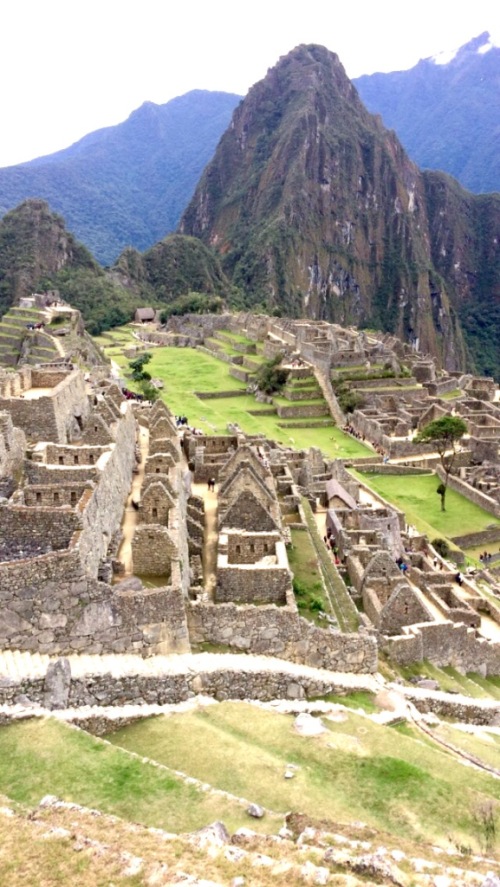
Overall, Cusco is the most beautiful city, and Machu Picchu is the most beautiful citadel. Set aside as much time as you can to visit both.
The post Cusco and the Sacred Valley appeared first on Never. Not. Eating..
]]>The post Lima – The Capital of Peru appeared first on Never. Not. Eating..
]]>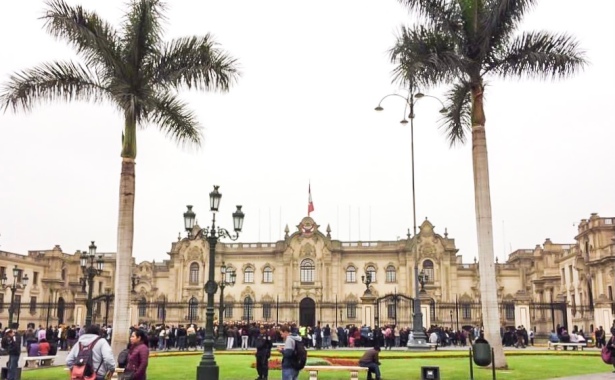
ARRIVING IN LIMA – THE CAPITAL
It is very likely that you will fly into Jorge Chávez International Airport upon arrival in Peru. If you are staying in a hostel, you can ask them to arrange a cab for you, which is what I did.
As a solo female traveler, this is always the scariest part…navigating your way from the airport to your first accommodation without knowing which way was up…or much of the language for that matter. I found that having someone waiting for me with my name on a little piece of paper took away a lot of the nerves. If you grab your own cab, just be sure to always settle on a price beforehand or ask for the meter.
WHERE TO STAY IN LIMA
I did a lot of research on the different neighbourhoods and areas of Lima before my trip. The more popular tourist areas include Central Lima, San Isidro, Miraflores and Barranco. As a backpacker, I would recommend staying in Miraflores or Barranco. Central Lima is known to be a little more sketchy at night and San Isidro is too pricey for the typical backpacker. Dorm beds in Miraflores and Barranco average between 15-20 CAD per night (11-15 USD).
Miraflores
ACCOMMODATIONS
I stayed at a hostel called Pariwana when I was in Miraflores, Lima. It was in an excellent location – walking distance to the cliffside and surrounded by cute restaurants, cafes, bars and malls. I chose Pariwana because it not only had great reviews, but it looked like somewhere that had a mix of both chill vibes and a good opportunity to socialize and meet people. It also had breakfast and unlimited tea included and the barkeeps make up some tasty (but dangerous) Pisco Sours. It was clean, the beds were comfortable and the employees were super nice and helpful.

If you stay in Miraflores, I would recommend staying in one of the hostels that surround Parque Kennedy and Parque Central de Miraflores. The park is in the shape of a triangle with the tip surrounded by malls, restaurants and your everyday McDonald’s.
Pariwana is directly across from the McDonald’s. I spent many nights walking the perimeter of the park as this is where you will find many eateries, cafes, cultural events, museums (many of which are free) and food vendors. The coast is a straight, 10-minute stroll down Av. Jose Larco and you should walk it many times, because a view like that never gets old.
Pariwana offered a few FREE tours that you could go on throughout the week. I took advantage of these tours and visited the downtown historic centre (Old Lima) as well as the closeby artsy Barranco neighbourhood. The tour guides worked solely on tips and the tours were educational, fun and a great way to meet people. The downtown tour even included pisco tastings…worth it!
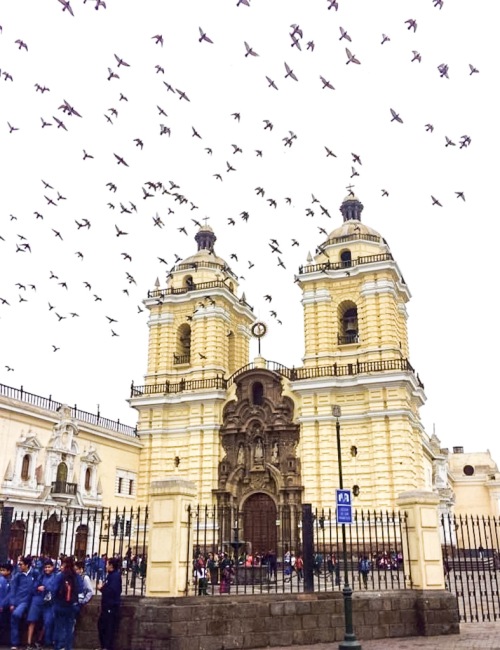
Other hostels near Kennedy Park that have received great reviews are:
FOOD
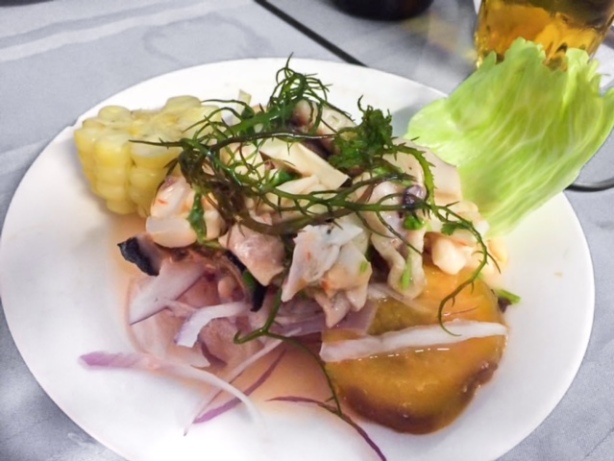
If you are looking for an authentic experience, try Punto Azul on Calle San Martin. It was by far the best ceviche I had while in Lima. They also serve other popular Peruvian dishes, like tacu tacu (rice and beans) and causa (a potato dish). Everything was delicious and priced for a backpacker! Just make sure you go earlier in the day as it becomes busy and the best ceviche is served at lunch, when the catch is still fresh!
Another delicious, yet economical eatery that I tried was La Lucha Sangucheria. They serve a variety of yummy sandwiches and juices. As it is a chain, you will find a few of them around Lima. There is one located at Parque Kennedy, diagonal from Pariwana. Their sandwiches are loaded with meats of all kinds, from chicken to turkey to ham to the classic chicharron. They serve beverages such as fresh juices, frozen juices, shakes, coffee and pisco sours. Yum!
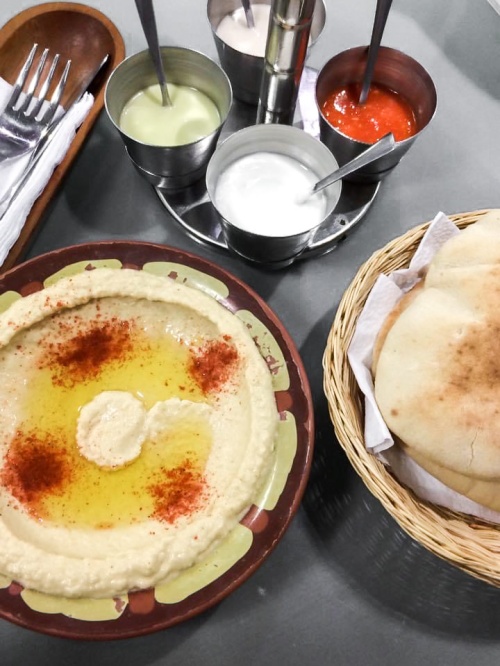
If you’ve been in Peru for a while and are looking for a change from the local food, you have to try Tierra Santa. It serves shawarma, hummus, pita and all things Middle Eastern. It is DELICIOUS. Some of the best hummus I have ever had. It is decently priced and a short walk from the hostels around the Parque.
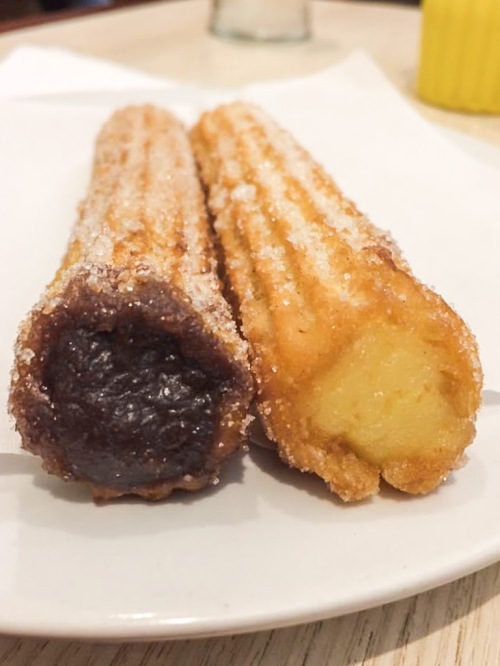
Finally, you can’t be in Peru and not have churros. There are so many places to buy them in Miraflores, and all over Peru for that matter. You can purchase them off of vendors on the street or hit up a local cafe to enjoy. I tried the ones at Manolo. It’s a busy place, but the churros here are delicious. Try the filled ones!
THINGS TO DO
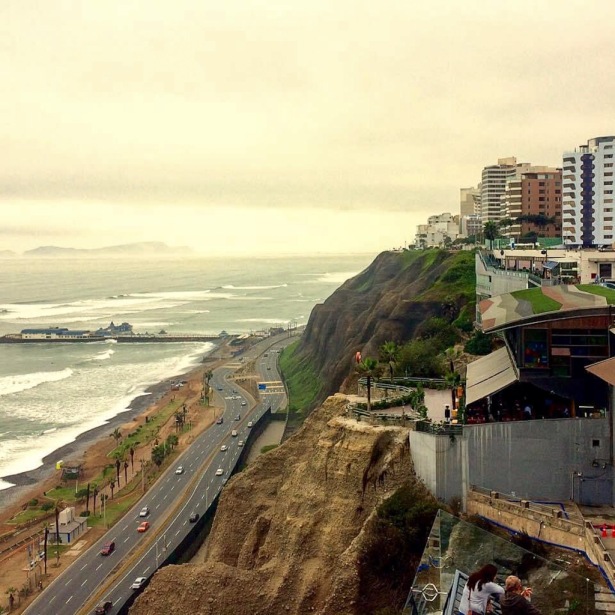
Firstly, LARCOMAR. If you like to shop, and LOVE a good view – Go. To. Larcomar. Right on the coastline, this is a pricier, open-concept mall with some more expensive-brand stores, but even if you aren’t making any purchases, it’s something to see. It was worth going solely for the view of the steep cliffside, Pacific waters and the food court palettas. You can also gain free access to the SAM Salla De Arte Moderno Museum right inside of the shopping area. Winning.
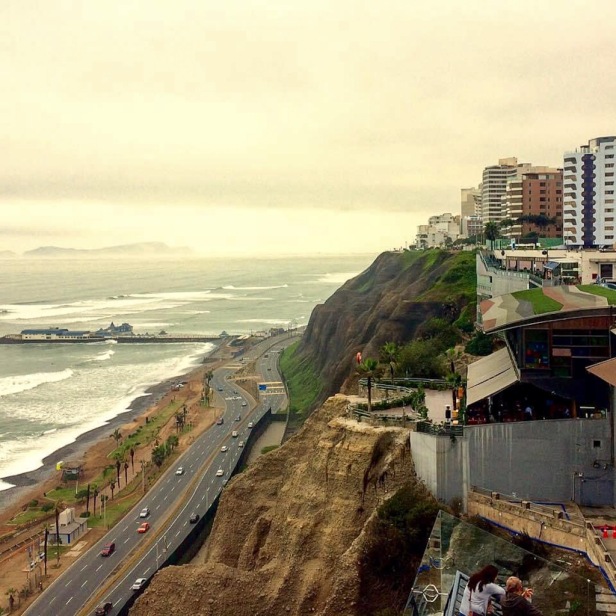
Around Larcomar, you can also watch or participate in many fun activities. Sit at one of the viewpoints and watch the paragliders, enjoy a walk down the pier or rent a bike and scoot around Miraflores. You can also take surfing lessons on the beach!
RUINS
I walked to a site called Huaca Pucllana, which only took about 20 minutes from Parque Kennedy. Entrance cost 15 sol (about $6 CAD or $4.50 USD) and included a guided tour which lasted for about an hour. I found the ruins to be fascinating as the city was built up around them so it was like you were standing amongst two worlds – that which was built several thousands of years ago and the modern urban sprawl. It also housed some cute local animals (alpacas and guinea pigs).
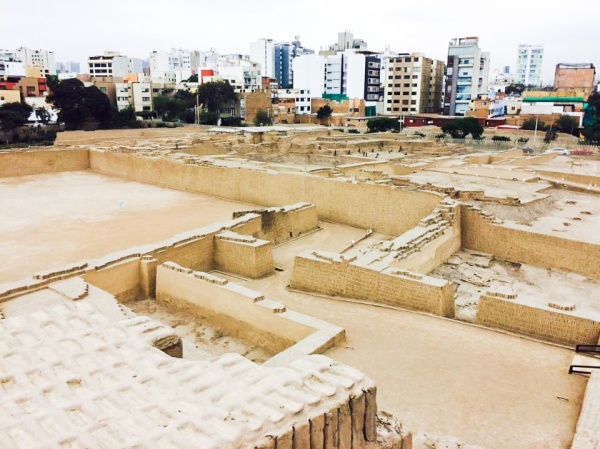
Miraflores was my favourite part of Lima. If you are flying into the capital, you need to make a stop in this beautiful and vibrant city!
Barranco
Known as the more eclectic, artsy district, Barranco is another good option for backpackers. It is a bit further down the coast from the airport, but it’s a funky little place where the streets are lined with artwork and culture. It is a popular area for nightlife and food as well.
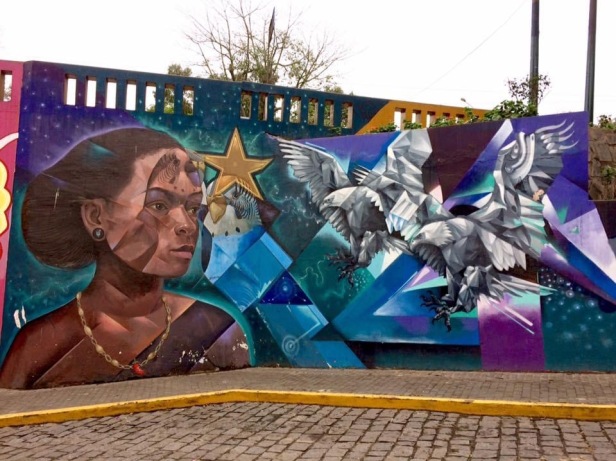
ACCOMMODATIONS
Although I didn’t stay in Barranco, I have compiled the names of a few hostels that have received great reviews that you could look at if you choose to stay in this neighbourhood:
The Point – A party hostel that is clean, close to the beach and has friendly staff.
Barranco’s Backpacker’s Inn – A quiet hostel, close to the beach and the main square.
Casa Eguren Art Hostel – A highly “Instagrammable” space. This accommodation is a gorgeous 19th century poet’s home that’s been turned into a hostel. The building is surrounded by the city’s art and is a few blocks from the coast.
FOOD
Inspired by fresh markets and seasonal foods, LA 73 is one of Barranco’s hippest bistros. The menu has a good variety and is decently priced if you are travelling on a budget.
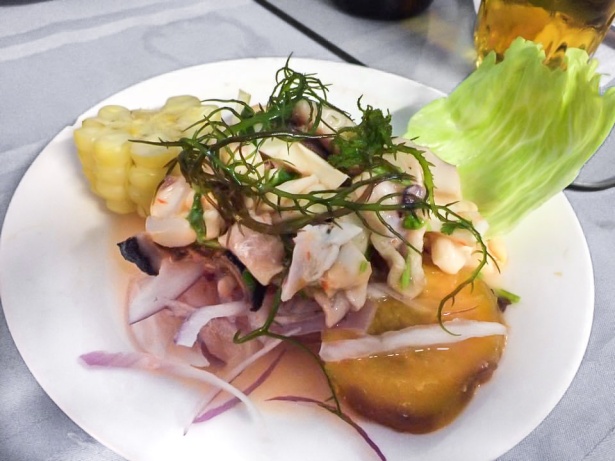
Secondly, El Muelle de Barranco is a great seafood and cevicheria option. Their portions are large and prices are low. They have an English menu, despite being full of locals. This hot spot generates a lot of traffic, so it’s best to go for an earlier lunch.
If you are looking for something different, check out Burrito Bar. Everything on the menu is made inhouse and is a delicious representation of Mexican cuisine. They serve burritos, tacos, quesadillas and chips with salsa. They also have a variety of refreshing drinks, including a few craft beers!
THINGS TO DO
Firstly, just walking the streets is exciting when you are in Barranco. It is so “hip” and eclectic and there is art everywhere. Take in the sights and enjoy the coastal views with a stroll through the neighbourhood! You will likely stumble upon the “Bridge of Sighs,” or La Puente de Los Suspiros, in Spanish.
The Bridge of Sighs
This bridge is one of the most popular symbols of art and love in Barranco. History says that it was a meeting place for men and women looking to find love and “woo” one another. The sounds of romantic “sighs” were what gave this bridge it’s name. It is also said that if you can hold your breath as you walk it’s entire length, one of your wishes will come true. I tried, and might I just say, I was successful. I can’t remember what I wished for though.
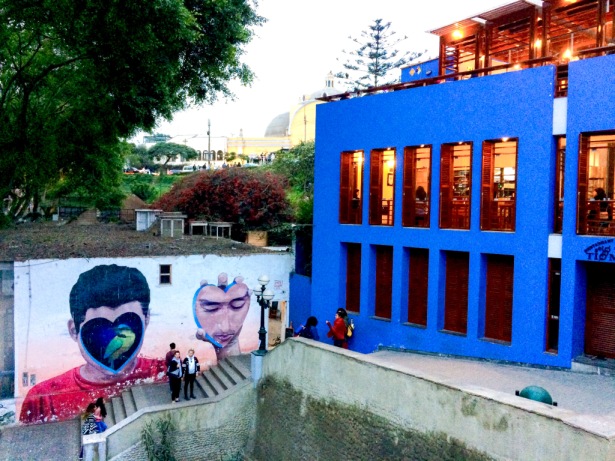
You will also likely come across Barranco’s Main Square. An exciting place to be, as it is constantly booming with local artists and performances. Standing in the square, you will have a 360 view of some of Barranco’s beautiful architecture and colourful buildings. It is worth a visit to just hang out and be amongst all of the daily happenings.
As Barranco is an art-forward town, you can’t skip out on it’s contemporary museums, especially MATE. This museum was founded by Mario Testino and shows an impressively modern display of artworks which focus on culture and heritage.
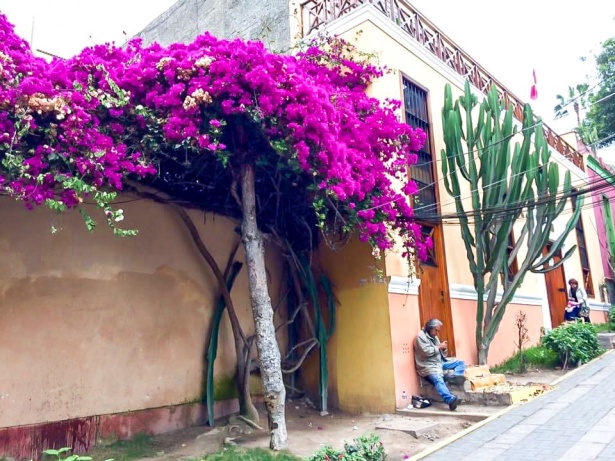
Finally, on your walk around town, you will come across the Bajada de los Baños, a long walkway leading down to the coast. As an old fishing village, fishermen used to walk the path to the Pacific. Now, it is lined with a number of restaurants and watering holes to stop in at.
Barranco is just a 30-minute walk from Miraflores. You can’t get lost as you just need to follow the coastline until you hit Larcomar. Both districts are well worth a visit!
YOU NEED TO VISIT LIMA – THE CAPITAL CITY
Lima – the capital, is an exciting city regardless of where you choose to stay. Enjoy the food, walk the cliffside, drink a pisco, and try surfing in the Pacific. It’s well worth a visit!
Go back to Southern Peru – A Backpacker’s Guide
The post Lima – The Capital of Peru appeared first on Never. Not. Eating..
]]>The post Southern Peru – A Backpacker’s Guide appeared first on Never. Not. Eating..
]]>
WHO IS THIS GUIDE FOR?
This guide will be helpful for those who are thinking about visiting Southern Peru, or have already booked and are looking for things to do, places to stay and important information that you may not find anywhere else. It is solely based on my experience there and what I took away from each place.
TRAVELING SOUTHERN PERU
Currency – In Peru, they use the Sol. One Sol is about $0.40 Canadian or $0.30 USD. I found most parts of the country to be reasonably priced. Food and other purchases were overall less expensive than home.
Safety – As a solo female traveler, I felt extremely safe in all of the regions that I visited. There are tourists everywhere and I found the Peruvians to be very friendly. As with anywhere that you travel, you still need to be cautious at night when you are alone, but I never had a problem.
BEST TIMES TO TRAVEL TO SOUTHERN PERU
Since Peru is in the Southern hemisphere, it’s summer and winter months are opposite that of Canada and the USA. I went in July, and would definitely recommend going during their winter (May – September), especially if you are hiking.
Peruvian winters are fairly mild, and I found the temperature hovered between 18-22 degrees Celsius during the day. The capital (Lima) had the most consistent weather of any city I had ever been to…18 degrees and overcast, every day. Despite being higher in elevation, Cusco is warmer, sitting at around 20-22 degrees each day, but significantly dropping overnight. It is not uncommon to experience weather from all four seasons within one day’s time in Peru’s higher altitude regions.
Summer in Peru (December – March) is warmer, but also subject to rain. If you are planning to visit Machu Picchu during Peru’s summer months, beware that they close the Inca trails each February due to heavier rainfall.
WHAT TO BRING
This depends on the type of trip you are taking. Below are some ideas that I found to be super helpful while there:
Backpacks: You need a few good backpacks, especially if you are going to be doing a lot of trekking.
Your main backpack needs to be a good size because you will likely need more space for heavier clothing options in order to battle the mountain climates. Click here for a great option that also includes a day pack. I also brought the Sirrus 24 Hiking Backpack with me on longer treks. It doubled as a carry-on for flights.
Also, instead of bringing a purse with me, I like to tour around cities by foot with a mini backpack, like the one found here. I find it to be way more comfortable to carry this than an over-the-shoulder bag. They are light, small and allow you to be hands-free for picture-taking! I also find mini backpacks to be my go-to when I’m out exploring all day long and need to pack a few extra snacks along with my wallet and camera. They are perfectly-sized and so comfortable!
Another one of my greatest discoveries as a traveler were these packing cubes. They have helped me stay sane when trying to locate something in my main backpack. I highly recommend purchasing them. I roll up my clothing and put all of my tops in one, bottoms in another, toiletries in a separate one, etc. They are lifesavers and so cheap.
Clothing
It is all about layering. The weather in Peru depends on the region you are traveling to and the time of year that you visit. Other than the coastline, a lot of the south is at a higher altitude and therefore it is much cooler at night. I would recommend packing everything from light tank tops to long sleeve shirts to cozy sweatshirts to a warm down jacket. This way, you can peel off during the day and add on at night when temperatures drop significantly. There were some nights I had to sleep in a hat (or, a toque as we call it in Canada) and mittens because the hostels don’t have heat, and the temperature dropped close to zero.
TRANSPORTATION
Getting around is pretty easy. When travelling city-to-city, I used Peru Hop, with the exception of going from Lima to Cusco, in which I flew. Peru Hop is one of the more pricey bus companies, but I think it is completely worth the safety, comfort and overall experience.
I did the “Full South to Lima” tour, which I loved because it hit up all of the main spots in the south of the country. The bus tour was pretty much seamless, with a few exceptions. Because I was in Peru during their winter months (July/August), we hit snow on the way down from Cusco to Puno and were stuck on the road for a few hours. Luckily it was an overnight bus and we could just extend our chairs and go to sleep.
The bus schedule was efficient and easy-to-use. The flexible, hop-on, hop-off style allowed you to stay at each location for as many days as you would like. The guides were good sources of information and always cheerful and upbeat. The majority of my buses were on time and usually had a variety of open seats throughout the entire tour. They provided blankets and had USB charging ports on every seat. And, if all that isn’t enough, they also provided a number of free tours at many of the stops, which I took full advantage of. The Pisco Vineyard tour was my favourite.
FOOD
The food in Peru is unlike anywhere else I’ve been. It is heavily influenced by the ancient Incas and other indigenous populations, but has also been shaped by Chinese (Chifa) and European immigration to the country, featuring a wide variety of dishes.
Peruvian staples, found in a good majority of dishes include: potatoes, fish, corn, quinoa and beans. Guinea Pig is another popular dish that they serve (cuy), which I can’t say I tried…you will discover why if you keep reading. Lima is a growing culinary city, with restaurants run by highly-ranked, world-class chefs. However, I would really recommend being cautious when eating outside of Lima, in some of Peru’s other popular tourist destinations. I, myself, picked up a stomach bug and was down-for-the-count for a few days, on antibiotics, alike many other travellers I ran into.
Afterwards, I found it difficult to want to experience the cultural cuisine in fear of getting sick again, so if I can pass on any of my learnings to you, it would be best to avoid anything you are unsure about. Just be cautious and stick to cooked foods, especially in Cusco.
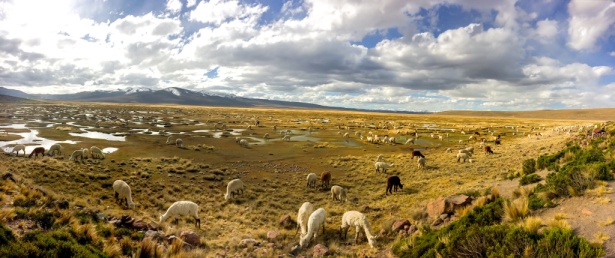
With all of that said, I would like to dive in for a deeper, more detailed look at each of the cities that I stayed in. I speak from my experiences and hope these posts provide useful information to backpackers in regards to where to stay, what to see, how to get around and anything else that I found to be helpful while touring the south of Peru.
THE BEST CITIES IN SOUTHERN PERU
Click on the links below for more in depth information on each of the cities that I visited.
The post Southern Peru – A Backpacker’s Guide appeared first on Never. Not. Eating..
]]>